


Wholesale vintage vs modern thrift inventory: which is more profitable?
TL;DR
- Wholesale Vintage offers higher profit margins (3x-10x) and faster turnover but requires a higher upfront investment per piece.
- Modern Thrift provides lower costs and high volume but suffers from market saturation and "fast fashion" depreciation.
- Profitability Winner: Vintage wholesale is more profitable for specialized resellers targeting high-intent buyers on Depop, Etsy, and Instagram.
The truth is, both models can make money, but they operate on completely different math. Modern thrift is a volume game. You’re digging through the dirt to find that one diamond. Wholesale vintage is a curation game. You pay more upfront so you don't have to spend 40 hours a week at the Goodwill Outlet. After running Thrift Vintage Fashion and seeing how our buyers' businesses grow, I’ve realized that the "wholesale vintage vs modern thrift inventory: which is more profitable?" debate really comes down to how you value your time and your brand's ceiling.
Which inventory type has the highest ROI?
Wholesale vintage inventory generally yields a higher Return on Investment (ROI) because the scarcity of 20+ year-old items allows for significant price markups that modern mass-produced clothing cannot sustain. While a modern thrifted shirt might cost $2 and sell for $15 (7.5x ROI), a wholesale vintage tee might cost $12 and sell for $80 or more (6.6x ROI but significantly higher net profit per unit).
In my experience, modern thrift inventory is getting harder to scale. The "bins" are crowded, and the quality of modern manufacturing is dropping. You are essentially reselling fast fashion that was cheap to begin with. When you buy vintage, you are selling history, quality, and a specific aesthetic that a buyer can't just go buy at the mall.
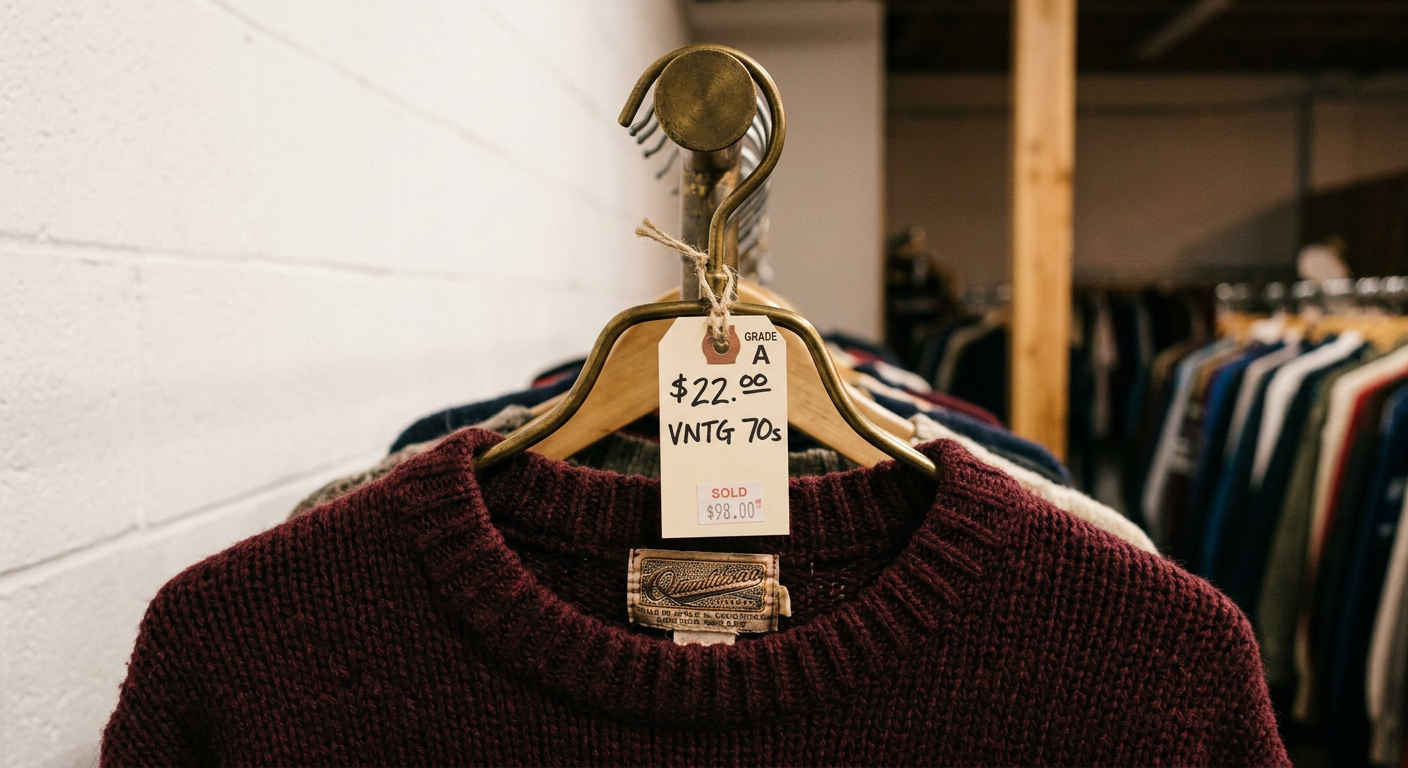
Wholesale Vintage vs Modern Thrift Inventory: Which is more profitable for small resellers?
Wholesale vintage is more profitable for small resellers because it minimizes the "time-to-list" cost and maximizes the profit per transaction, which is critical when you are a one-person show. If you only have 10 hours a week to work on your side hustle, you’ll grow faster selling ten $50 items than fifty $10 items.
Let’s look at the actual numbers. If you buy a Mickey/Disney T-Shirt from us, you aren't just buying a shirt; you're buying a pre-vetted item that already has a hungry market on Depop.
| Feature | Wholesale Vintage (2026) | Modern Thrift Inventory |
|---|---|---|
| Average Cost per Piece | $8.00 - $25.00 | $1.00 - $5.00 |
| Average Sale Price | $35.00 - $150.00+ | $12.00 - $25.00 |
| Time Spent Sourcing | Low (Ordered in bulk/bales) | Very High (Driving, digging) |
| Market Demand | High / Niche Collectors | Medium / Casual Shoppers |
| Scalability | High (Repeatable supply) | Low (Random luck) |
How much do vintage clothing bales cost?
Vintage clothing bales typically cost between $400 and $2,500 depending on the category, weight (usually 100 lbs), and the grade of the items inside. A 100 lb bale of Grade A sweatshirts will command a much higher price than a mixed bale of unbranded 90s flannels.A "bale" refers to a large, compressed bundle of used clothing, typically weighing 100 lbs or more, sourced from textile recyclers or specialist graders. When you buy a Kids Mixed Bale from us, you’re getting a massive volume of inventory delivered to your door. The profitability here comes from the "cherry-picking" effect—you find the high-value pieces that pay for the whole bale, leaving the rest as pure profit.
Is modern thrift inventory still worth the effort in 2026?
Modern thrift inventory is only worth the effort if you have access to low-cost "pay-by-the-pound" outlets and have the infrastructure to process high volumes of low-margin goods. For most resellers, the rising cost of gas and the time spent "hunting" makes modern thrift less profitable than buying curated wholesale lots.
I’ve seen resellers burn out because they spend all Saturday at thrift stores and come home with five items. That’s not a business; that’s a hobby. If you want to scale, you need a repeatable process. That’s why we focus on things like the Brand Name Mix. It takes the guesswork out. You know you’re getting brands that people are actually searching for on Poshmark.
Why vintage categories like Gorpwear and College Tees are dominating
If you’re looking at where the money is moving, it’s in specific niches. Gorpwear (the "hiking/outdoor" aesthetic) and College & University T-Shirts are huge right now.
- Gorpwear: Vintage North Face, Patagonia, and Carhartt jackets have a massive resale value. They are durable, and the vintage cuts are preferred over the new ones.
- College Gear: People have a permanent emotional connection to their schools. A 1994 Florida Gators crewneck will always sell faster than a generic modern fleece.
- 90s Rock: Check out our Rock & Music T-Shirts Mystery Box. The margins on these are insane because the supply of authentic 90s tour shirts is shrinking every year.
The Hidden Costs of Modern Thrift
When people say modern thrift is more profitable because the "buy cost" is lower, they usually forget to factor in:
- Gas and Vehicle Wear: Driving to 5 different stores a day adds up.
- Cleaning Time: Modern thrift items are often in worse condition than graded wholesale vintage.
- Inventory Stagnation: Modern items go out of style fast. Vintage items have already stood the test of time.
How to transition from thrifting to wholesale
If you’re currently a "bin hunter" and want to move into wholesale, don't buy a 1,000 lb bale on day one. Start with smaller mystery boxes or category-specific packs. This allows you to test the quality and see how your specific customer base reacts to the higher price points.
At Thrift Vintage Fashion, we see the most successful resellers use a hybrid model. They keep the "thrill of the hunt" for their social media content but rely on our wholesale loads to keep their shops stocked year-round. This ensures they never have a "dry spell" where they have nothing to list.
Frequently Asked Questions
Which inventory is more profitable for Depop? Wholesale vintage is more profitable for Depop because the platform's user base specifically searches for unique, aged aesthetics that command higher prices than modern thrifted items.
What is a vintage clothing bale? A vintage clothing bale is a professional-grade, compressed bundle of secondhand clothing, usually weighing 100 lbs, that has been sorted by category for resellers to buy in bulk.
How do I find a reliable vintage wholesaler? A reliable wholesaler should have transparent grading processes, clear shipping policies, and a proven track record of supplying consistent categories like those found at Thrift Vintage Fashion.
Is modern thrift inventory bad for business? It is not bad, but it is harder to scale because it requires significantly more manual labor and time to find quality items compared to buying graded wholesale lots.
What is the best vintage category to sell? Currently, vintage graphic tees, 90s sports licensing, and "gorpwear" (outdoor gear) are the most profitable categories due to high demand and limited supply.
Final Thoughts
When you look at the question of wholesale vintage vs modern thrift inventory: which is more profitable?, the answer is clear for anyone looking to build a real brand. If you want to spend your time marketing and growing your business rather than digging through bins of fast fashion leftovers, wholesale vintage is the way to go.
At Thrift Vintage Fashion, we’ve built our entire operation to help you skip the "hunt" and go straight to the "sell." Whether you’re looking for a specific niche or a massive bale to kick off your season, we’ve got the inventory that actually moves. Invest in quality, value your time, and watch your margins grow.
Ready to level up your shop? Check out our latest Wholesale Vintage Clothing Mixes and start sourcing like a pro.