


Which vintage clothing categories are best for 90s streetwear resellers?
TL;DR
- Heavyweight Graphic Tees: Focus on single-stitch construction, licensed Disney, and rock band prints for maximum resale margin.
- Outerwear & Techwear: Carhartt workwear jackets and oversized nylon windbreakers command the highest price points in cold seasons.
- Denim & Bottoms: Oversized, light-wash denim and cargo pants from legacy brands remain the most consistent movers for Depop and Poshmark.
- Upcycled Blanks: Damaged bulk items serve as the perfect base for high-value creative intervention and brand building.
At Thrift Vintage Fashion, we categorize millions of pounds of clothing annually. I personally handle the upcycling and creative reuse side, which means I see exactly what’s in those vintage clothing bales for sale and, more importantly, what’s worth saving. The 90s streetwear market in 2026 is driven by "Gorpcore" (utilitarian outdoor wear), oversized athletic silhouettes, and the "Y2K-transition" aesthetic.
Success in this niche requires knowing which categories have the highest "profit-per-hour" potential. Whether you are washing and listing "as-is" or doing creative textile intervention like I do, your sourcing strategy dictates your ceiling. Let’s break down the categories that are actually worth your investment right now.
What are the most profitable vintage t-shirt categories for 90s streetwear?
The most profitable vintage t-shirt categories for 90s streetwear resellers are licensed Mickey/Disney T-Shirts, Rock & Music T-Shirts, and 90s-era College & University T-Shirts. These items consistently retain value because of their high-quality cotton construction, unique fading characteristics, and nostalgic graphic appeal that modern brands fail to replicate.
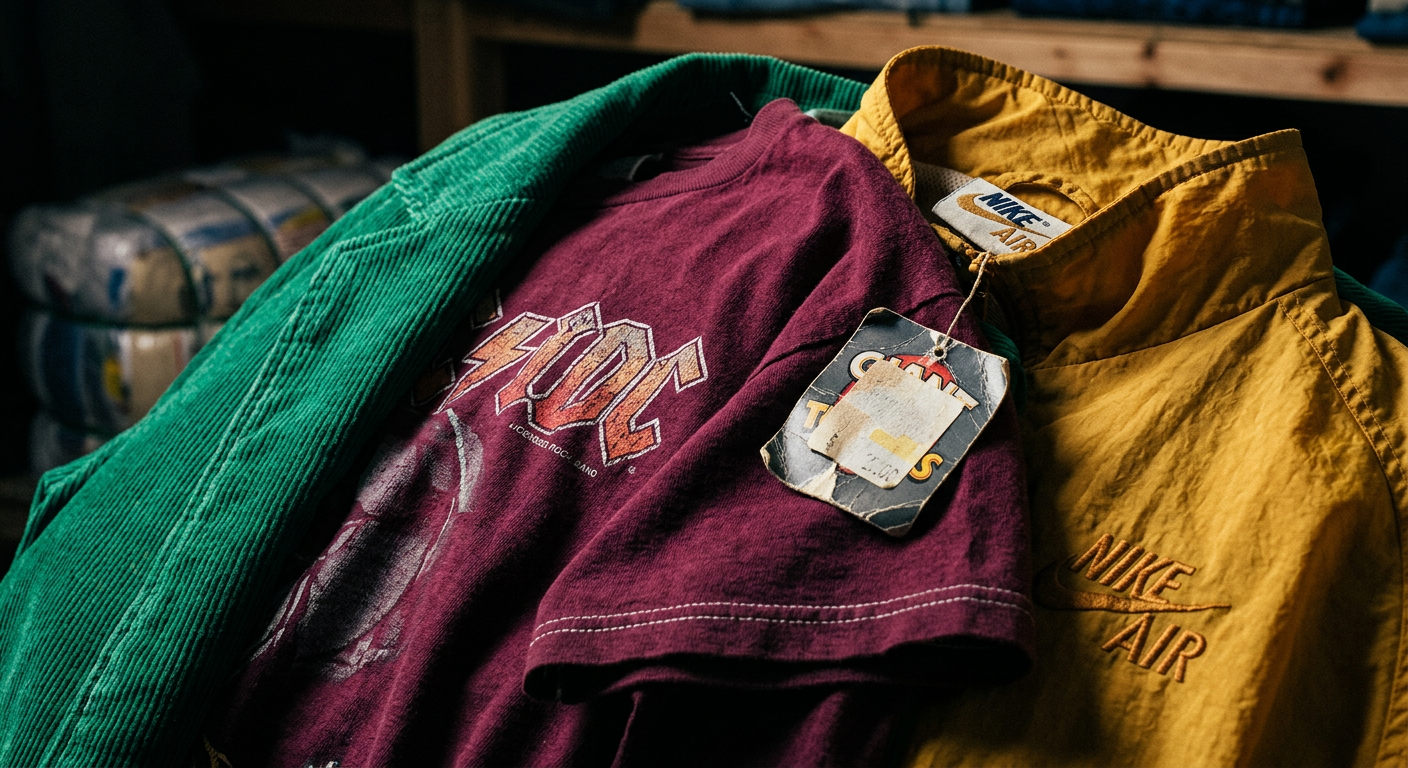
When I’m grading a Wholesale Vintage Tees lot, I’m looking for the "Holy Trinity": heavyweight cotton, single-stitch hems, and a cracked plastisol print. In 2026, the demand for 90s Disney is still peaking because of the crossover between streetwear collectors and general nostalgia buffs. A single 1994 Lion King or Aladdin tee sourced in bulk can flip for $60 to $150 depending on the fade.
For the music category, it’s not just about the big bands anymore. 90s "alt-rock" and rap tees are the gold standard. Even if a shirt has a small hole or a blowout under the arm, I don't toss it. I’ll use those "Rebel" grade shirts for upcycling projects, as seen in our Rebel T-Shirt Pack, where the "distressed" look actually adds a premium to the streetwear aesthetic.
Which vintage outerwear categories sell fastest for streetwear brands?
The vintage outerwear categories that sell fastest are 90s workwear (specifically Carhartt and Dickies jackets), oversized nylon windbreakers, and "Gorpcore" fleece pullovers. These categories move quickly because they offer a functional, durable silhouette that fits the current "utilitarian" streetwear trend dominated by platforms like Depop and TikTok Shop.
I’ve personally tested the "Carhartt Effect." A distressed Detroit jacket sourced from a Brand Name Mix can be listed and sold within 48 hours if the patina is right. Streetwear isn't about looking new; it’s about character. If I find a jacket with heavy sun-fading or paint splatters, I actually value it higher.
Outerwear Performance Comparison Table (Estimated 2026 Metrics):
| Category | Typical Resale Price | Demand Level | Best Sourcing Method |
|---|---|---|---|
| Carhartt Detroit Jackets | $120 - $250 | High | Brand Name Mix Bales |
| 90s Nike/Adidas Windbreakers | $45 - $85 | Medium-High | Mixed Athletic Bales |
| Patagonia/North Face Fleece | $60 - $110 | Very High | Gorpwear Mystery Boxes |
| Unbranded 90s Leather Jackets | $70 - $130 | Medium | Bulk Vintage Leather Lots |
Resellers should focus on the 5-lb to 10-lb weight range for these items. Heavier pieces mean higher shipping costs, so ensure your margins on workwear account for the weight of the duck canvas.
Is vintage denim still a top category for 90s streetwear resellers?
Vintage denim remains a top category for 90s streetwear resellers, specifically 90s-era Levi’s 501s, 550s (relaxed fit), and baggy carpenter pants. The shift toward "baggy" and "skater" silhouettes in 2026 has made standard slim-fit jeans almost obsolete in the streetwear scene, pushing the value of vintage wide-leg cuts to an all-time high.
In my workshop, I see a lot of "Grade B" denim. These are the jeans with frayed hems or blown-out knees. Instead of seeing these as flaws, realize that the 90s grunge and skate aesthetic prizes this wear and tear. I often take two pairs of damaged 90s Levi's and "frankenstein" them into a two-tone oversized pair. This creative intervention can turn a $10 wholesale item into a $180 "1-of-1" designer piece.
When you buy Wholesale Vintage Clothing Mixes, look for the "Made in USA" tags on the denim. This usually indicates a higher quality 100% cotton weave that stacks perfectly over a pair of chunky 90s sneakers. This is a crucial detail for buyers on Instagram and Depop who know their "orange tab" history.
How to identify the best vintage fleece and sweatshirts for resale?
To identify the best vintage fleece and sweatshirts, look for "heavyweight" cross-weave construction, drop-shoulder seams, and embroidered (rather than printed) collegiate or athletic branding. The 90s "oversized" look is achieved through the structural integrity of the fabric; a thin, modern polyester blend won't hang on the body the way a vintage 12oz cotton sweatshirt does.
I’ve processed hundreds of College & University T-Shirts and sweatshirts. The winners are always the "Champion Reverse Weave" or similar high-ounce garments. In the 90s, brands weren't cutting corners on fabric. That’s why these items survive 30 years and still look better than something you'd buy at a mall today.
If you’re sourcing for a TikTok Shop or Instagram audience, focus on the "Aesthetic" categories. Think unbranded, solid-color 90s sweatshirts in earth tones—moss green, navy, and charcoal. These are the "blanks" that influencers use to build "clean girl" or "minimalist streetwear" looks. They are easy to style, easy to photograph, and have a very low return rate because the fit is intentionally loose.
Why upcycling is the "secret weapon" for 90s streetwear resellers
Upcycling is the process of taking discarded or damaged vintage textiles and transforming them into higher-value garments through sewing, dyeing, or structural modification. For a streetwear reseller, this means you can buy "damaged" or "Grade C" bales at a fraction of the cost and turn them into your highest-margin inventory.
I don't just sell vintage; I reinvent it. When we get a Mixed Vintage Retro Kids Bale, and I find pieces that are too small or stained, I don't see waste. I see patchwork material for a 90s-style hoodie.
My "Profit Per Hour" Upcycling Formula:
- Sourcing: Damage-grade vintage hoodie ($3.00) + scraps from a 90s t-shirt ($0.50).
- Labor: 45 minutes of cleaning and patchwork sewing.
- Total Cost: ~$15.00 (including overhead).
- Market Value: $85.00 - $110.00 as a "1-of-1" upcycled piece.
- Profit: ~$70.00 per hour.
Frequently Asked Questions
Which vintage t-shirts have the highest resale value?
Single-stitch 90s graphic tees featuring licensed Disney characters, iconic rock bands, or 90s horror movies typically hold the highest resale value. These items are prized for their unique fading, heavyweight cotton, and nostalgic cultural significance.
How can I tell if a 90s t-shirt is authentic?
Look for a "single-stitch" hem on the sleeves and waist, a faded or "paper" feel to the neck tag, and a screen-printed graphic that feels thick or "cracked" rather than a smooth modern digital print. Many 90s shirts were also "Made in USA," which is a strong indicator of age.
Is buying vintage clothing in bulk worth it for small sellers?
Yes, buying in bulk via mystery boxes or small bales reduces your "cost per garment" significantly, allowing for higher profit margins. For small sellers on Depop or Poshmark, mixing high-demand branded items with unbranded "aesthetic" pieces is the most sustainable growth strategy.
What is the best way to clean wholesale vintage clothing?
I recommend a cold-water soak with a gentle, pH-neutral detergent followed by air drying to preserve the integrity of old fibers and prints. For heavy stains on workwear or denim, a localized "Oxy" soak can work wonders without damaging the overall patina of the garment.
What does "single-stitch" mean in vintage clothing?
Single-stitch refers to a finishing technique on the sleeve and bottom hems of a t-shirt where only one line of visible stitching is used. This was the industry standard until the mid-to-late 90s when dual-needle (double-stitch) machines became the norm for increased durability.
Final Thoughts on Sourcing 90s Streetwear
The 90s streetwear market isn't about finding a needle in a haystack; it’s about recognizing the haystack for what it is—a massive opportunity for volume and creative intervention. Whether you are focusing on the high-end Wholesale Vintage Tees or getting your hands dirty with upcycling projects, the key is consistency and fabric knowledge.
I’ve seen this industry change, but the demand for quality 90s silhouettes never wavers. If you want to scale, stop chasing single items at the local thrift store and start thinking like a textile processor. Buy the bulk, sort the gems, and reinvent the rest.
Ready to stock your shop with the best 90s categories? Explore our full range of curated mixes and bales at Thrift Vintage Fashion and start building your inventory today.