


Where Do Vintage Resellers Buy Their Inventory in Bulk?
TL;DR
- Successful resellers source from wholesale suppliers, textile recycling plants, and specialized graders to avoid the "thrift store grind."
- Buying by the bale or mix (typically 100-1000 lbs) significantly lowers the cost-per-item, maximizing profit margins.
- Specialized inventory like Disney, Carhartt, or pro-sports gear is best sourced through category-specific wholesale lots.
- Upcyclers and designers utilize bulk "grade B" or damaged lots to secure high-quality textile fuel for creative reuse at pennies on the dollar.
The real players in this industry—the ones moving five or six figures of inventory on Depop, Poshmark, or in their own boutiques—don’t rely on luck at the local Goodwill. They go straight to the source. They buy in bulk. Whether it’s a 1,000-lb bale of mixed rags or a curated 50-piece box of Wholesale Vintage Tees — THRIFT VINTAGE, sourcing at scale is the only way to ensure consistent growth and a healthy "profit per hour."
Where do vintage resellers buy their inventory in bulk?
Vintage resellers buy their inventory in bulk primarily from wholesale vintage suppliers, textile recycling facilities (rag houses), and secondary market graders who sort massive quantities of used clothing into sellable categories. These suppliers allow businesses to purchase "by the pound" or in curated lots, bypassing the labor-intensive process of individual garment hunting.
Commercial Wholesale Suppliers
Most professional resellers work with dedicated wholesalers like Thrift Vintage Fashion. We act as the bridge between raw textile waste and the curated market. We take in massive shipments, grade them for quality, and sort them into categories like Wholesale Vintage Clothing Mixes — THRIFT VINTAGE. This is the most efficient method for a reseller because the "heavy lifting" of sorting is already done, allowing you to focus on photography and sales.
Textile Graders and Rag Houses
A rag house is a large-scale industrial facility that processes millions of pounds of donated clothing. While some rag houses sell directly to the public, many require minimum orders of 1,000 lbs or more. This is where I find the best "upcycling fuel"—the pieces that might have a small stain or a blown-out seam but are made of incredible 1990s heavyweight cotton. Buying at this level is the cheapest way to acquire inventory, but it requires the most space and labor to process.
How do vintage clothing bales work for resellers?
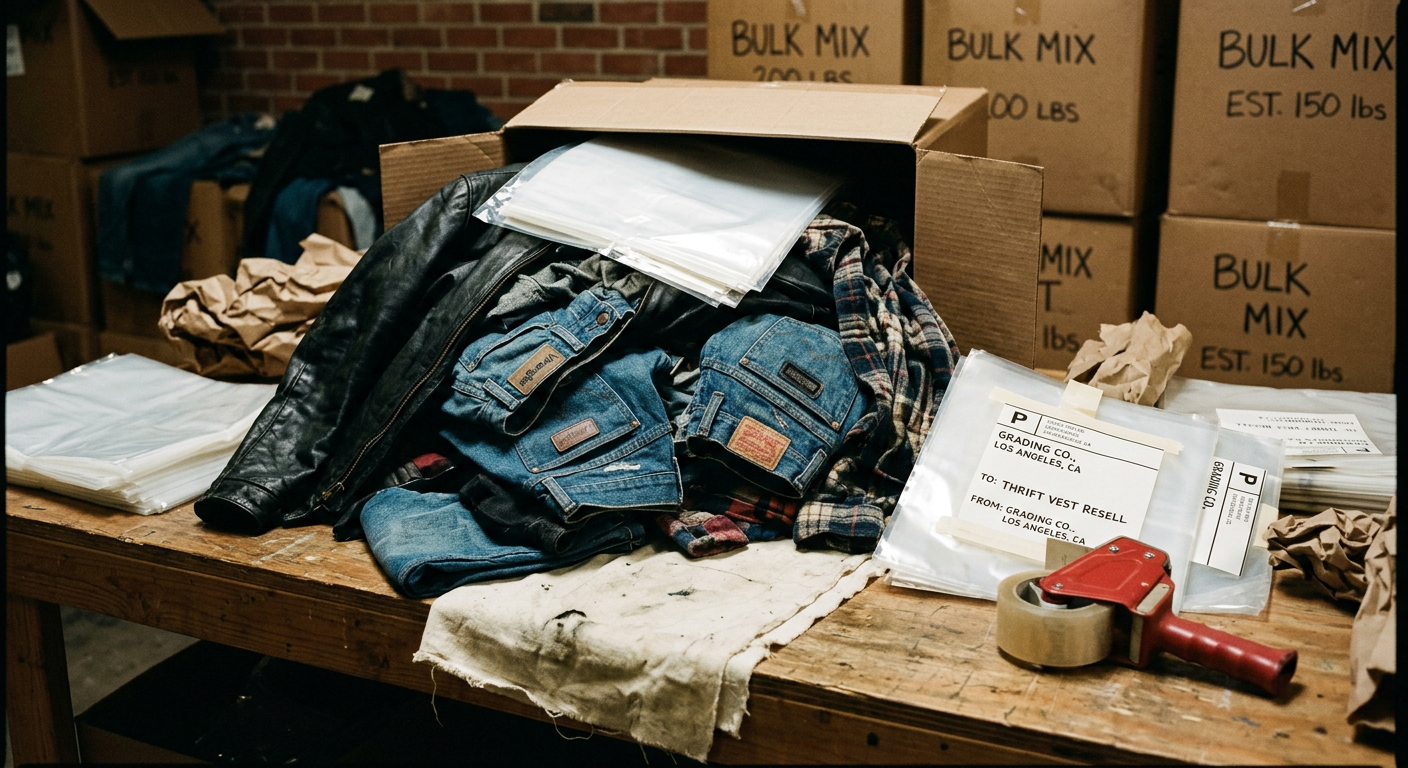
A vintage clothing bale is a highly compressed block of apparel, typically weighing between 100 lbs and 1,000 lbs, that has been sorted by category but remains "unpicked" at the individual item level. Bales are the gold standard for high-volume resellers because they offer the lowest possible cost-per-unit, often bringing the price of a vintage t-shirt down to under $2.00.
When I’m looking at a Thrift Vintage Fashion: Kids Mixed Bale, I’m calculating the yield. In a 100-lb bale, you might get 200–300 items depending on the weight of the fabric. Not every item is a winner, but the sheer volume covers your initial investment quickly.
The Different Grades of Bulk Inventory
When sourcing in bulk, you’ll encounter "grading." Understanding these definitions is critical for your bottom line:
- Grade A: Items in excellent condition with no visible holes, stains, or major fading. These are ready for immediate listing.
- Grade B: Items with minor "character"—a small pinhole, a cracked graphic, or light fading. For me, Grade B is where the money is made through upcycling.
- Unrated/Original Mall: Raw donations that haven't been sorted. High risk, but high reward for those willing to dig.
Which categories are best for bulk vintage sourcing?
The best categories for bulk sourcing are high-demand, evergreen items like pro-sports apparel, branded workwear, and pop-culture icons which maintain a steady resale value regardless of seasonal trends. For 2026, we are seeing a massive surge in demand for "Gorpcore" (utility/outdoor gear) and 90s/00s character tees.
If you are just starting, I always recommend focusing on categories with a recognizable "hit" rate. Here’s a breakdown of what I’ve seen perform best in our warehouse:
| Category | Best For | Potential Profit Margin |
|---|---|---|
| Mickey/Disney T-Shirts | Depop / Etsy | 300% - 500% |
| College & University T-Shirts | Poshmark / Instagram | 200% - 400% |
| Carhartt / Workwear | Brick & Mortar | 150% - 300% |
| Brand Name Mix | General Webstores | 250% - 450% |
How to source vintage clothing for Instagram shop sales?
To source for an Instagram shop, you should look for "curated wholesale" lots rather than raw bales to ensure every item fits your specific brand aesthetic and requires minimal prep time. Instagram buyers are visually driven; they want the "look" without the hunt, so buying a pre-sorted mix allows you to drop a cohesive collection all at once.
When I’m prepping a drop, I don’t want to spend 40 hours cleaning one bale. I’d rather buy a curated box where 90% of the items are ready to shoot after a quick steam. For those focusing on the "rebel" or streetwear aesthetic, picking up a Rebel T-Shirt Pack is a faster way to stock a curated feed than digging through a 500-lb unsorted rag house mountain.
Why is bulk sourcing more sustainable than traditional retail?
Bulk sourcing is a form of circular fashion that diverts massive quantities of textiles from landfills by reintroducing them into the consumer market as high-value vintage goods. By purchasing at the wholesale level, resellers stabilize the demand for used clothing, which prevents "donation fatigue" where local charities become overwhelmed and discard excess stock.
From my perspective as an upcycler, bulk sourcing is the ultimate environmental win. When I see a lot of damaged denim, I don’t see trash; I see the raw materials for a patchwork jacket that can sell for $200. We’ve found that the The Donation Model is Broken specifically because people don't realize that bulk processing is necessary to save these clothes. Buying in bulk isn't just a business move—it's a rescue mission.
Calculating Your "Profit Per Hour"
Most resellers forget to track their time. If it takes you 4 hours of driving to find 5 shirts, your cost-of-acquisition is actually your gas plus your hourly rate.
- Thrift Store Scouting: 5 items / 4 hours = 1.25 items per hour.
- Wholesale Bulk Sourcing: 100 items / 1 hour (sorting time) = 100 items per hour.
Frequently Asked Questions
Where do vintage resellers buy their inventory in bulk?
They buy from wholesale companies like Thrift Vintage Fashion, regional rag houses, and textile recycling centers that sort clothing into specific grades and categories.
What is a vintage clothing bale?
A vintage clothing bale is a compressed, large-scale package of used garments (often 100-1,000 lbs) sold at a low price-per-pound for resellers to sort and flip.
How much does shipping cost for bulk vintage?
Shipping costs vary by weight and distance, but most wholesalers use LTL (Less Than Truckload) freight for orders over 200 lbs to keep the cost-per-item as low as possible.
Can I choose specific items in a wholesale lot?
In a "mystery" or "mix" lot, you cannot choose specific items, but you can choose the category (e.g., 90s Pro Sports) and the grade (Condition) of the items.
Is buying bulk vintage profitable for beginners?
Yes, it is often more profitable than thrift-hunting because it lowers the cost-per-item and significantly reduces the time spent sourcing, allowing you to list more inventory.
Stop Hunting, Start Scaling
If you’re ready to move from a hobby to a high-volume business, it’s time to look past the local thrift shop window. The infrastructure for massive vintage success already exists in our warehouses. By sourcing your inventory in bulk from Thrift Vintage Fashion, you’re not just buying clothes—you’re buying back your time and securing the margins necessary to actually grow. Whether you’re looking for a specific aesthetic or a 100-lb bale to dig through, we’ve got the textiles waiting for their next life. Stop digging and start selling.
Ready to stock up? Explore our full range of curated mixes and bulk categories today.