


What to look for when buying vintage clothing in bulk
TL;DR
- Prioritize Grading Consistency: Ensure your supplier adheres to strict "Grade A" standards to avoid high waste percentages in bulk lots.
- Focus on High-Demand Categories: Target specialized mixes like Wholesale Vintage Tees or Disney to ensure faster inventory turnover.
- Calculate True Cost Per Piece: Always divide the total bale or mix price by the estimated item count to find your breakeven point.
- Verify Authenticity: Look for specific era-appropriate tags and single-stitch construction when sourcing bulk 90s apparel.
At Thrift Vintage Fashion, we process thousands of pounds of inventory every month. I’ve seen what sells on Depop today and what sits in a warehouse for six months. Sourcing is the most important part of your workflow. If you get the sourcing right, the selling part becomes ten times easier. Here is exactly what I look for when I’m putting together a bulk order or grading a new shipment.
What to look for when buying vintage clothing in bulk?
When buying vintage clothing in bulk, you must prioritize the "Grade" of the clothing, the era-specific identifiers (like tags and stitching), and the weight-to-item ratio of the lot. A successful bulk purchase depends on finding Wholesale Vintage Clothing Mixes that provide a high percentage of "Grade A" items with minimal staining, holes, or dry rot. You are looking for a balance between popular modern trends and true vintage rarities that justify your initial investment.
Understanding Grading: Grade A vs. Grade B
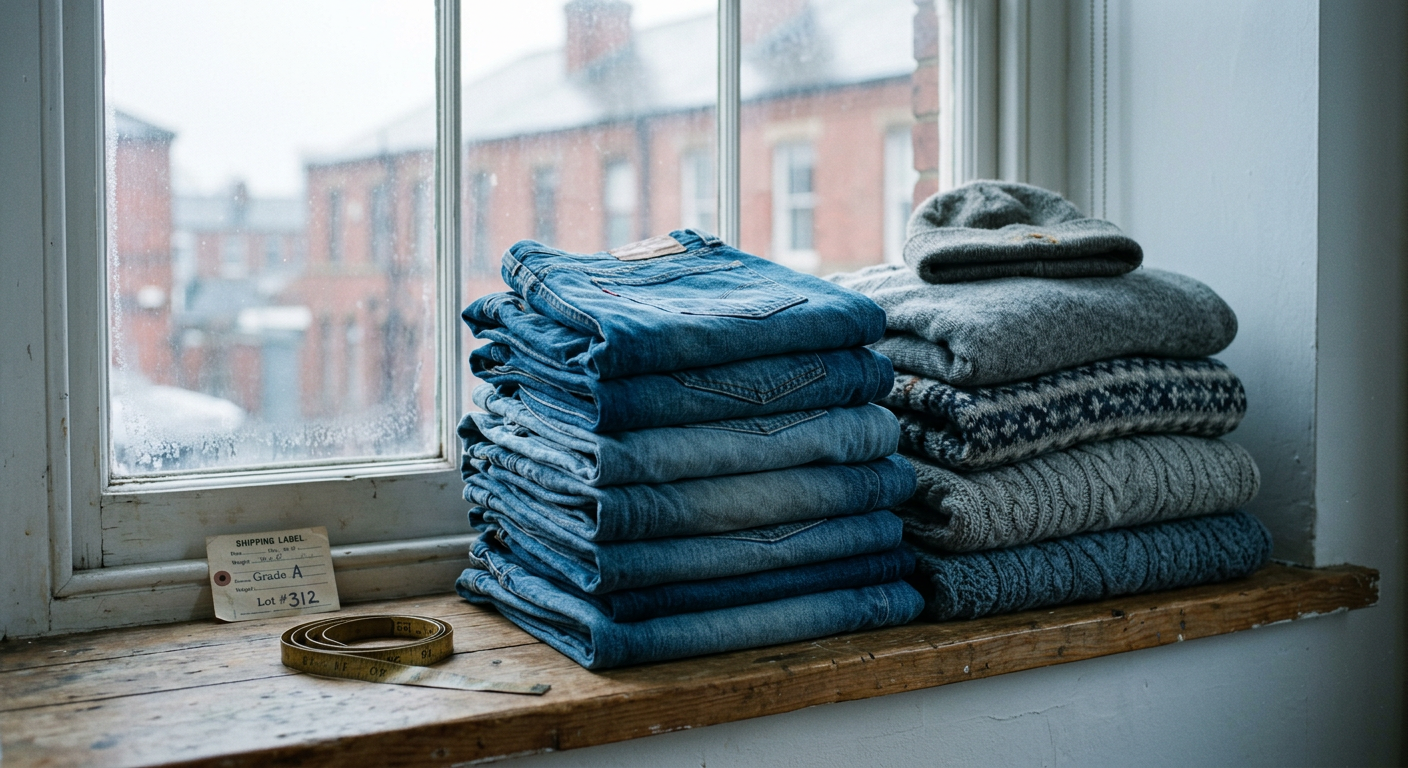
Grading refers to the condition classification of used clothing, where Grade A typically means no major flaws and Grade B includes items with visible wear, small holes, or stains. In my experience, if you are a reseller on Poshmark or Depop, you want to stick to Grade A as much as possible.
- Grade A: Items are ready to be photographed and listed. They might need a quick steam, but there are no structural issues.
- Grade B: These are better for upcyclers or "bin" style sales. If you buy a Mixed Vintage Retro Kids Bale, for example, you want to know exactly how much "B" grade is mixed in so you can price your store accordingly.
Checking for Authenticity and Era
If someone tells you they have a "90s bulk lot," check the tags. "Vintage" generally refers to items at least 20 years old. In 2026, that means anything from 2006 and earlier. Look for "Made in USA" tags on t-shirts or specific brands like Screen Stars, Giant, or Brockum. Single-stitch hems (a single line of thread instead of two) are a classic indicator of pre-1996 t-shirts, though some brands transitioned later.
How do you calculate the profit margin on a vintage bale?
To calculate the profit margin on a vintage bale, subtract the total cost of the bale (including shipping) from the estimated total resale value of all sellable items. For example, if a 100 lb bale of tees costs you $400 and contains roughly 200 shirts, your cost per unit is $2.00. If you sell each shirt for an average of $20, your gross profit is $3,600 before fees and labor.
When I’m looking at our Mickey/Disney T-Shirts, I always tell people to look at the "floor." Your "floor" is the minimum price you can get for the most basic item in the box. If your floor covers your cost per piece, every "banger" or rare item in that box is pure profit.
| Category | Typical Weight | Approx. Item Count | Est. Cost Per Piece |
|---|---|---|---|
| T-Shirt Mixes | 50 lbs | 100-110 items | $3.50 - $6.00 |
| Heavy Jackets | 50 lbs | 20-30 items | $15.00 - $25.00 |
| Denim (Pants) | 100 lbs | 60-70 items | $7.00 - $12.00 |
| Sweatshirts | 50 lbs | 40-50 items | $8.00 - $11.00 |
Takeaway: Never buy bulk without knowing your average cost per piece; it's the only metric that truly dictates your margins.
What are the best vintage categories for resale in 2026?
The best vintage categories for resale currently include oversized graphic tees, 90s streetwear, workwear (like Carhartt), and "Gorpcore" outdoor gear. Buyers are specifically looking for College & University T-Shirts and 80s/90s music merch because these items have high sell-through rates on visual platforms like TikTok Shop and Instagram.
I’ve noticed a Massive shift toward "Brand Name" reliability. People want labels they recognize. That’s why our Brand Name Mix is consistently one of our top movers. It takes the guesswork out of the equation for the reseller because the brand equity is already there.
The Rise of Gorpcore and Workwear
Workwear is not slowing down. If you can find bulk lots containing Detroit jackets or B01 dungarees, grab them. The fading and "distressed" look that used to be considered Grade B is now actually a selling point for the vintage workwear aesthetic. However, make sure the zippers work—a broken zipper can cut your resale value by 60%.
How do I find a reliable wholesale vintage supplier?
Finding a reliable wholesale vintage supplier requires verifying their sorting process, checking for transparent return policies, and looking for reviews from actual resellers. A reliable supplier should be able to tell you exactly how they grade their items and what the expected "waste" percentage is for any given bale.
I always suggest starting small. Don’t go out and buy 1,000 lbs of inventory from a company you’ve never worked with. Buy a Rock & Music T-Shirts Mystery Box or a small 25 lb pack first. See if their version of "Grade A" matches yours. At Thrift Vintage Fashion, we pride ourselves on being honest about what’s in the box. If a mix is meant for "daily wear," we say it. If it’s "premium," we say it.
Red Flags to Watch For
- Stock Photos Only: If a wholesaler only shows "perfect" items and doesn't show the reality of a bulk pile, be careful.
- No Weight Specifications: Everything in bulk should be measured in pounds. If they are vague about the weight, they are likely overcharging.
- Unusually Low Prices: If a price seems too good to be true (like $1 per shirt for vintage Harley tees), it probably is. You'll likely end up with modern reprints or heavy staining.
How to prep bulk vintage clothing for your shop?
Prepping bulk vintage clothing involves a systematic process of sorting, cleaning, repairing, and documenting each item to maximize its market value. Once you open a bale or box, you should immediately separate items by condition: those ready for sale, those needing a wash, and those requiring minor repairs like button replacements.
The Cleaning Process
I’ve seen too many people ruin good vintage by throwing it in a hot dryer.
- OxiClean Soaks: Great for whites and removing that "thrift store smell."
- Air Drying: Always air dry vintage graphics to prevent cracking and shrinkage.
- Steaming: A professional steamer is a better investment than an iron. It makes the fabric look plush and hides minor wrinkles that make clothes look "cheap" in photos.
Frequently Asked Questions
What is the difference between vintage and retro?
Vintage refers to clothing that is at least 20 years old, whereas retro refers to new clothing designed to imitate the style of a previous era.
Can I return a wholesale vintage bale?
Most wholesale vintage suppliers do not accept returns on bulk bales because the items are used and sold as-is, though some offer credits for significant grading errors.
How many t-shirts are in a 100 lb bale?
A 100 lb bale of vintage t-shirts typically contains between 200 and 220 individual shirts depending on the size and fabric weight.
What does "single stitch" mean in vintage?
Single stitch refers to a garment finishing technique where a single line of thread is used on hems and sleeves, usually indicating the item was made before the mid-1990s.
Is buying vintage in bulk sustainable?
Yes, buying bulk second-hand clothing is a core component of circular fashion, as it diverts textiles from landfills and reduces the demand for new garment production.
Growing Your Vintage Business in 2026
Sourcing is the heartbeat of your business. If you know what to look for when buying vintage clothing in bulk, you can scale your shop faster than you ever thought possible. It’s about the numbers, the grading, and knowing your audience.
Don't get discouraged if one box has a few duds. That's part of the game. The goal is to find a flow where your average return is consistently high. If you’re ready to stop hunting through individual racks and start buying like a pro, check out our full range of curated mixes at Thrift Vintage Fashion. We’ve done the heavy lifting (literally) so you can focus on selling.
Ready to stock your shop? Explore our Wholesale Vintage Mixes and start scaling your inventory today with Thrift Vintage Fashion.