


What is the Difference Between Grade A and Grade B Vintage Bales?
TL;DR
- Grade A Bales: Feature items in near-perfect condition with no visible holes, stains, or heavy fading; ready for immediate resale.
- Grade B Bales: Contain items with minor flaws like small holes, washable marks, or "character" wear; requires cleaning or repair.
- Profit Strategy: Grade A offers fast turnover for boutiques, while Grade B provides higher margins for upcyclers and high-volume resellers.
I’ve seen resellers lose their shirt because they bought a Grade B bale expecting "retail ready" items, and I’ve seen others pass up Grade B lots that were actually goldmines for their specific niche. In the warehouse, we use a strict rubric to categorize these, and understanding that rubric is the difference between a successful drop on Poshmark and a pile of unsellable fabric in your garage.
What is the difference between Grade A and Grade B vintage bales?
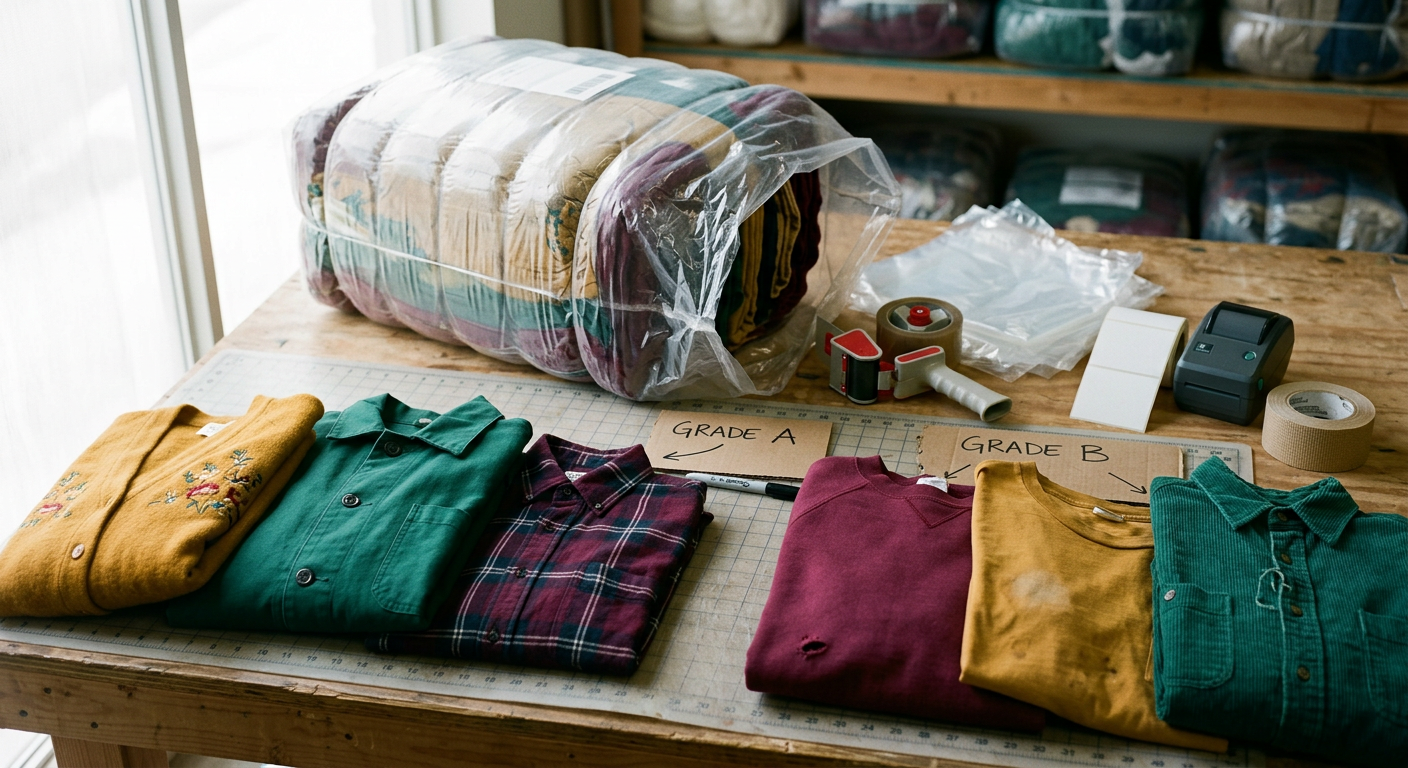
The primary difference between Grade A and Grade B vintage bales is the physical condition and immediate "resalability" of the individual garments. Grade A items are categorized as being in "near-mint" or excellent vintage condition with no significant defects, whereas Grade B items often feature minor imperfections such as small holes, faint stains, or heavier "distressed" wear that may require cleaning or repair before sale.
Defining Grade A Vintage
Grade A refers to inventory that shows very little signs of previous wear. When I’m inspecting a Brand Name Mix, Grade A means I’m looking for vibrant colors, intact graphics, and functional hardware (zippers and buttons). Grade A is the standard for resellers who want to photograph an item and list it the same day.
Defining Grade B Vintage
Grade B refers to inventory that is structurally sound but aesthetically flawed. This means a Kids Mixed Bale might contain a sweatshirt with a small bleach spot or a pair of jeans with a frayed hem. Grade B is not "trash"; it is simply inventory that requires a bit of elbow grease—stain treatment, a trip through the wash, or a quick stitch—to reach its full market value.
Grade is about the labor you are willing to invest after the bale arrives.
How do wholesalers determine the grade of a vintage bale?
Wholesalers determine the grade of a vintage bale through a manual "pick and sort" process where workers inspect each garment for holes, stains, dry rot, and modern brand infiltration. At Thrift Vintage Fashion, we categorize items based on a percentage-based quality threshold where a Grade A bale must typically be 90-95% free of any visible defects.
The Inspection Process
My team handles the grading by hand. We don't just dump bins; we look at the high-friction areas. For example, when sorting Wholesale Vintage Tees, we check the underarms for yellowing and the necklines for stretching.
- Grade A Check: Is the graphic cracked? Is there "pilling" on the fabric? If the answer is yes, it’s bumped down.
- Grade B Check: Is the hole smaller than a dime? Can this stain be removed with a professional-grade soak? If the piece is a rare 90s Mickey/Disney T-Shirt, it stays in Grade B. If it’s shredded beyond repair, it’s culled entirely.
Accuracy Standards
No human grading process is 100% perfect. In a 100 lb bale, I always tell my buyers to expect a 5-10% human error margin. If you buy Grade A, you might still find one or two Grade B items that slipped through. If you buy Grade B, you’ll almost always find several Grade A "gems" that the sorter was unsure about.
Which grade offers the best return on investment for resellers?
The grade that offers the best return on investment (ROI) depends entirely on your business model: Grade A is best for boutiques needing high-speed turnover, while Grade B offers the highest potential margins for those willing to clean, repair, or upcycle "distressed" pieces. If you factor in the lower cost per lb of Grade B, your profit-per-item can actually be higher than Grade A if you have the tools to restore the garments.
| Feature | Grade A | Grade B |
|---|---|---|
| Price Point | Premium / Higher cost per lb | Discounted / Budget-friendly |
| Condition | 90-95% Retail Ready | 60-80% Retail Ready |
| Labor Required | Minimal (Steam & List) | High (Wash, Repair, Treat) |
| Platform Match | Instagram, Curated Boutiques | Depop, Etsy (Upcycled), Flea Markets |
| Typical Defects | None visible | Small holes, light stains, fading |
Why Grade A wins for speed
If you are running a high-end vintage shop, you don't have time to spend four hours soaking shirts in OxiClean. You need to get that College & University T-Shirt listed and sold within the week. Grade A allows you to maintain a "prestige" brand image without the overhead of a refurbishing department.
Why Grade B wins for margins
I’ve seen upcyclers take Grade B denim with blown-out knees and turn them into patchwork masterpieces that sell for triple the price of a standard Grade A pair. If you are sourcing Wholesale Vintage Clothing for Resellers, Grade B acts as raw material. You are paying for the "bones" of the vintage era, not the perfection of the item.
Common myths about Grade B vintage bales
One of the biggest misconceptions I hear in the warehouse is that Grade B is essentially "rag house" material or garbage. This is false; Grade B in the vintage world still consists of authentic, wearable vintage pieces, whereas "rag" or "grade C" is usually destined for fabric recycling or insulation.
Myth 1: Grade B is all "Modern" Clothing
People think we hide new fast-fashion items in Grade B bales. At Thrift Vintage Fashion, our Grade B is still 100% vintage. A 1994 single-stitch shirt with a small hole is Grade B vintage. A brand-new 2024 shirt is just "used clothing" and shouldn't be in a vintage bale at all.
Myth 2: You can't sell Grade B on Poshmark
Actually, the "distressed" aesthetic is a major trend. If you label an item as "thrashed" or "faded to perfection," you can often sell Grade B items to the Gorpcore or Grunge crowds who specifically want that lived-in look. I’ve seen Rock & Music T-Shirts with heavy fading sell for more than their pristine counterparts because they look "more authentic."
How to clean and prep Grade B inventory for sale
To prep Grade B inventory, you should start with a "strip wash" using hot water and a heavy-duty degreaser or oxygen bleach, followed by minor repairs like de-pilling or sewing small seam rips. For stubborn stains on white cotton, I recommend a 24-hour soak in a dedicated laundry restorer, which often upgrades a Grade B item to Grade A status for a fraction of the cost.
I always keep a sewing kit and a fabric shaver on my desk. If I find a Grade B sweater with pilling, ten minutes with a shaver can make it look Grade A. Understanding how to clean and prep wholesale vintage clothing for resale is the single most important skill for a bulk buyer.
Frequently Asked Questions
What does Grade A mean in vintage?
Grade A means the clothing is in excellent to near-mint condition with no significant stains, holes, or damage. These items are generally ready to be priced and sold immediately by resellers.
Is Grade B clothing still wearable?
Yes, Grade B clothing is fully wearable but contains minor cosmetic flaws like small holes, washable marks, or heavy fading. Many resellers buy Grade B specifically for the "distressed" vintage look.
Can I return a bale if I don't like the grade?
Most wholesale vintage suppliers do not accept returns on opened bales because the inventory is unique and cannot be verified once unpacked. It is important to understand the error margins (usually 5-10%) before purchasing.
Do Grade B bales have more modern items?
No, a proper vintage Grade B bale should contain the same era of clothing as a Grade A bale. The "grade" refers only to the physical condition of the items, not their age or authenticity.
Are Grade A bales worth the extra cost?
Grade A bales are worth the cost for resellers who value time over money and do not have the facilities to wash or repair damaged clothing. They offer the fastest path to recouping your investment.
Choosing between grades isn't about which is "better"—it's about how much time you have. If you’re a solo entrepreneur working out of a spare bedroom, Grade A is your best friend. If you’re a high-volume seller with a warehouse and a washing station like we have at Thrift Vintage Fashion, Grade B is where you make your real money.
Ready to stock up? Check out our latest Wholesale Vintage Clothing Mixes to see what we’ve been grading this week.