


Vintage Clothing Bales vs. Hand-Picked Wholesale: Which is Better?
TL;DR
- Vintage Bales offer the lowest cost-per-unit, ideal for high-volume resellers and upcyclers seeking raw material.
- Hand-Picking provides curated, shelf-ready inventory but at a significantly higher price point and time investment.
- Profit Margins: Bales yield higher margins for those willing to process, while hand-picking stabilizes cash flow for small boutiques.
- Upcycling Value: Bales are superior for creative reuse, providing unique textiles and "damaged" goods that transform into high-value 1-of-1 pieces.
The debate over vintage clothing bales vs. hand-picked wholesale: which is better? usually ignores the tactical reality of the warehouse floor. Most people think hand-picking is the "safe" route because you see every stitch before you pay. But in my experience, hand-picking often locks you into a low ceiling. You’re paying a premium for someone else’s curation. Conversely, buying in bulk allows you to control the narrative of the garment from the moment it’s uncompressed.
What is the difference between vintage clothing bales and hand-picked wholesale?
Vintage clothing bales are large, compressed blocks of unsorted or semi-sorted apparel weighing between 100 lbs and 1,000 lbs, sold at a low price-per-pound. Hand-picked wholesale is a sourcing method where the buyer selects individual items from a supplier's inventory, paying a higher, per-piece price for specific styles, sizes, and conditions.
When you buy a Kids Mixed Bale, you are essentially purchasing a cross-section of a category. You get the volume required to feed an algorithm-heavy shop like Depop or Poshmark. Hand-picking is surgical; you’re buying for a specific aesthetic. However, if you are like me and you look for underutilized materials, hand-picking is often too expensive to justify for creative intervention.
How does the cost-per-unit compare between bales and hand-picking?
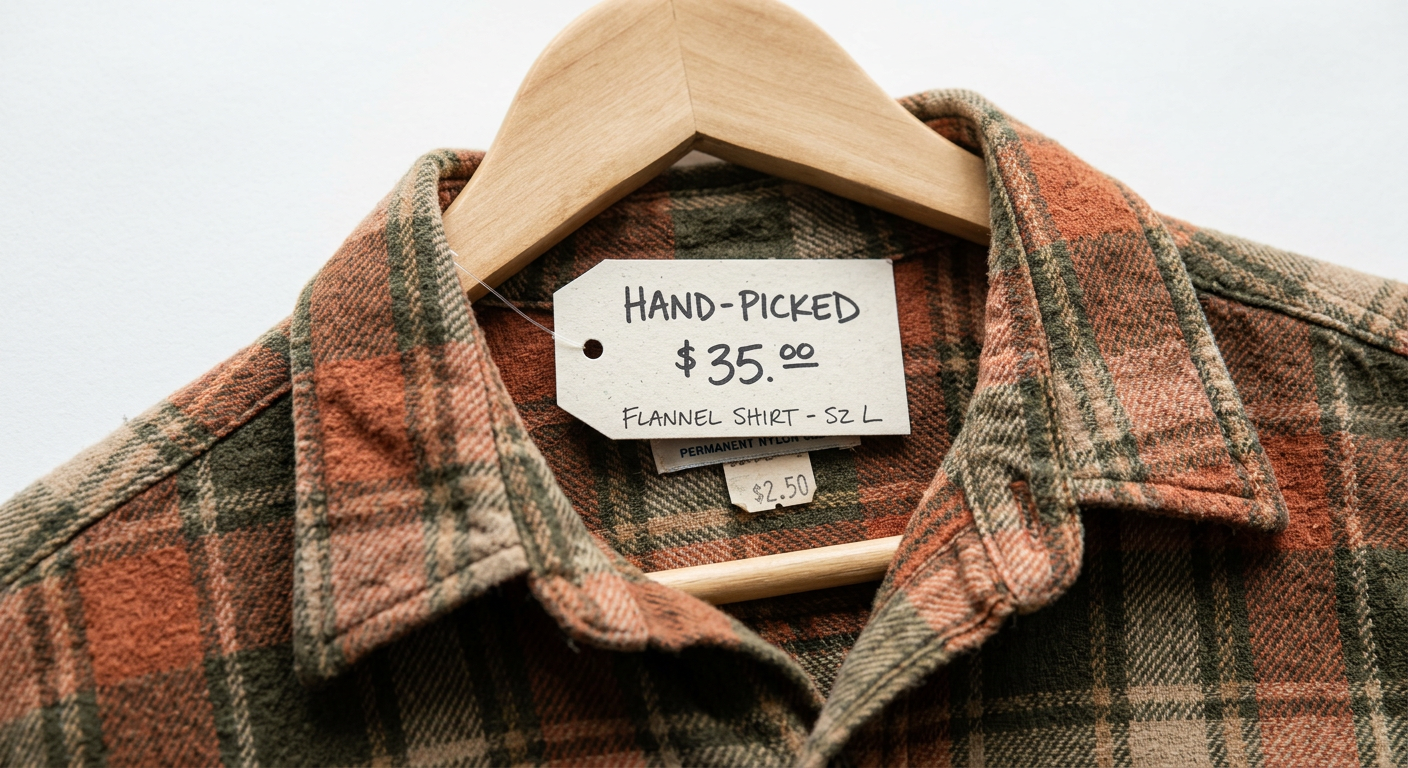
The cost-per-unit for vintage bales typically ranges from $1 to $5 per item once the total price is divided by the piece count, whereas hand-picked wholesale items usually start at $15 to $50 per piece depending on the brand and rarity. This means a single hand-picked Mickey/Disney T-Shirt might cost as much as ten shirts found within a bulk bale.
I’ve tracked the numbers on our Wholesale Vintage Tees categories. In a standard 100-lb bale of mix tees, you might get 180 to 200 items. If that bale costs you $600, your cost is $3 per shirt. Even if 20% of that bale is "dead stock" or requires heavy cleaning, your average cost for the sellable items only jumps to $3.75. Compare that to a hand-pick session where you might spend four hours to find 40 items at $20 each. You’ve spent more money and more time to get less inventory.
Cost Breakdown: 100-lb Bale vs. 40-Piece Hand-Pick
| Factor | 100-lb Bulk Bale | Hand-Picked Wholesale |
|---|---|---|
| Initial Investment | $500 - $800 | $800 - $1,200 |
| Cost Per Unit | ~$2.50 - $4.50 | $20.00 - $45.00 |
| Time Spent Sourcing | 15 minutes (online) | 4 - 6 hours (in-person) |
| Processing Time | High (sorting, washing) | Low (ready to list) |
| Potential ROI | 500% - 1,000% | 50% - 150% |
Why are vintage clothing bales better for upcyclers and designers?
Vintage clothing bales are superior for upcyclers because they provide a high volume of "Grade B" or damaged materials at a negligible cost, allowing for a higher "profit per hour" when these items are reconstructed into new designs. Since the cost-per-pound is so low, designers can afford to experiment, cut, and sew without the financial risk associated with hand-picked premium items.
In my workshop, I look for the Brand Name Mix bales. Often, a bale will contain a sweatshirt with a permanent stain or a blown-out elbow. To a hand-picker, that’s a "pass." To me, that’s a 1990s heavyweight cotton canvas that I can crop, overdye, or patchwork. If I paid $25 for that sweatshirt at a hand-pick warehouse, my margin for upcycling disappears. If I pulled it out of a bale where it cost me $4, I can sell the finished upcycled piece for $85 and clear a massive profit after labor.
What are the risks of buying vintage clothing bales vs. hand-picked?
The primary risk of vintage clothing bales is the "mystery factor," where a percentage of the weight may consist of unsellable or low-demand items, whereas the risk of hand-picking is the high overhead and the potential for slow-moving inventory due to the high initial acquisition cost. Buying bulk is a volume game; buying hand-picked is a precision game.
I’ve seen resellers get frustrated when a bale doesn't contain a "home run" item like a Rock & Music T-Shirt in the first ten pounds. But you have to look at the aggregate. If you are sourcing for a Poshmark shop, the "bread and butter" items—the $25–$35 sales—are what pay your rent. Bales are full of bread and butter. Hand-picking forces you to look for the "grails," and grails are getting harder and more expensive to find every year.
How to decide which method is better for your business?
To decide which is better, you need to audit your two most valuable resources: Space and Time.
- If you have space but no time: Buy Wholesale Vintage Clothing Mixes. You can process them in batches, and the bulk delivery saves you from traveling to warehouses.
- If you have time but no space: Hand-picking allows you to keep a very lean inventory of high-value items that don't require a storage unit.
- If you are an upcycler: Bales are the only way to go. You need the "scrap" and the "misfits" to create sustainable fashion that stands out.
Frequently Asked Questions
What is a vintage clothing bale?
A vintage clothing bale is a large, compressed bundle of used clothing, usually categorized by type (e.g., denim, tees, or jackets) and sold by weight.
Is hand-picking vintage more profitable?
Hand-picking has lower risk per item but usually results in lower overall profit margins because the initial cost per unit is significantly higher than bulk buying.
How many items are in a 100-lb bale?
A 100-lb bale typically contains between 150 and 250 items, depending on the weight of the specific garments (e.g., t-shirts vs. heavy coats).
Can I return a vintage bale?
Most wholesalers, including Thrift Vintage Fashion, sell bales as-is due to the heavy shipping costs and the nature of mystery bulk sourcing.
Which is better for Depop resellers?
Bales are generally better for Depop resellers who need a constant stream of new listings to satisfy the platform's algorithm and maintain visibility.
Sourcing isn't just about buying clothes; it's about managing a supply chain. Whether you're hunting for College & University T-Shirts or looking for bulk denim to turn into tote bags, you have to know your numbers. At Thrift Vintage Fashion, we see the value in both, but if you want to scale—and I mean really scale—you have to learn the art of the bale.
Stop overpaying for someone else’s eye. Start trusting your own. Access the raw inventory you need at Thrift Vintage Fashion and build something original. Grant yourself the margin to fail, to experiment, and ultimately, to profit.