


How to Source Profitably from Wholesale Vintage Clothing Suppliers in 2026
TL;DR
- Source Strategically: Diversify your inventory by choosing suppliers that offer both graded mixes and raw bales to balance quality and margin.
- Focus on Upcycling: Identify "B-grade" or damaged items in bulk lots to transform into high-margin 1-of-1 pieces.
- Calculate Costs: Always factor in weight-based shipping and "processing time" per garment to find your true profit per hour.
- Vet Your Suppliers: Look for transparency in grading standards and established sorting facilities to ensure consistent quality.
The business of vintage has shifted. In 2026, simply "finding" a cool shirt isn't a sustainable business model. To scale, you need a supply chain that feeds your specific niche, whether you’re stocking a high-volume Depop shop or a boutique upcycling studio. I’m going to break down how I evaluate suppliers, how to handle bulk inventory, and why your "cost per piece" is a lie if you aren't accounting for your own labor.
What are wholesale vintage clothing suppliers?
Wholesale vintage clothing suppliers are specialized textile distributors that source, sort, and sell used apparel in bulk to resellers, designers, and retailers. These companies bridge the gap between massive rag houses and individual small businesses by grading millions of pounds of clothing into specific categories like Wholesale Vintage Tees or branded outerwear.
Where do wholesale vintage clothing suppliers get their inventory?
Most reputable suppliers source their inventory from a combination of textile recycling programs, charitable donation overflows, and secondary market buy-backs. At Thrift Vintage Fashion, we see the life cycle of these garments firsthand; when the traditional donation model fails to find a local home for a piece, it enters the wholesale stream where we can give it a second life through grading or creative redesign.
How do you find the best wholesale vintage clothing suppliers for your shop?
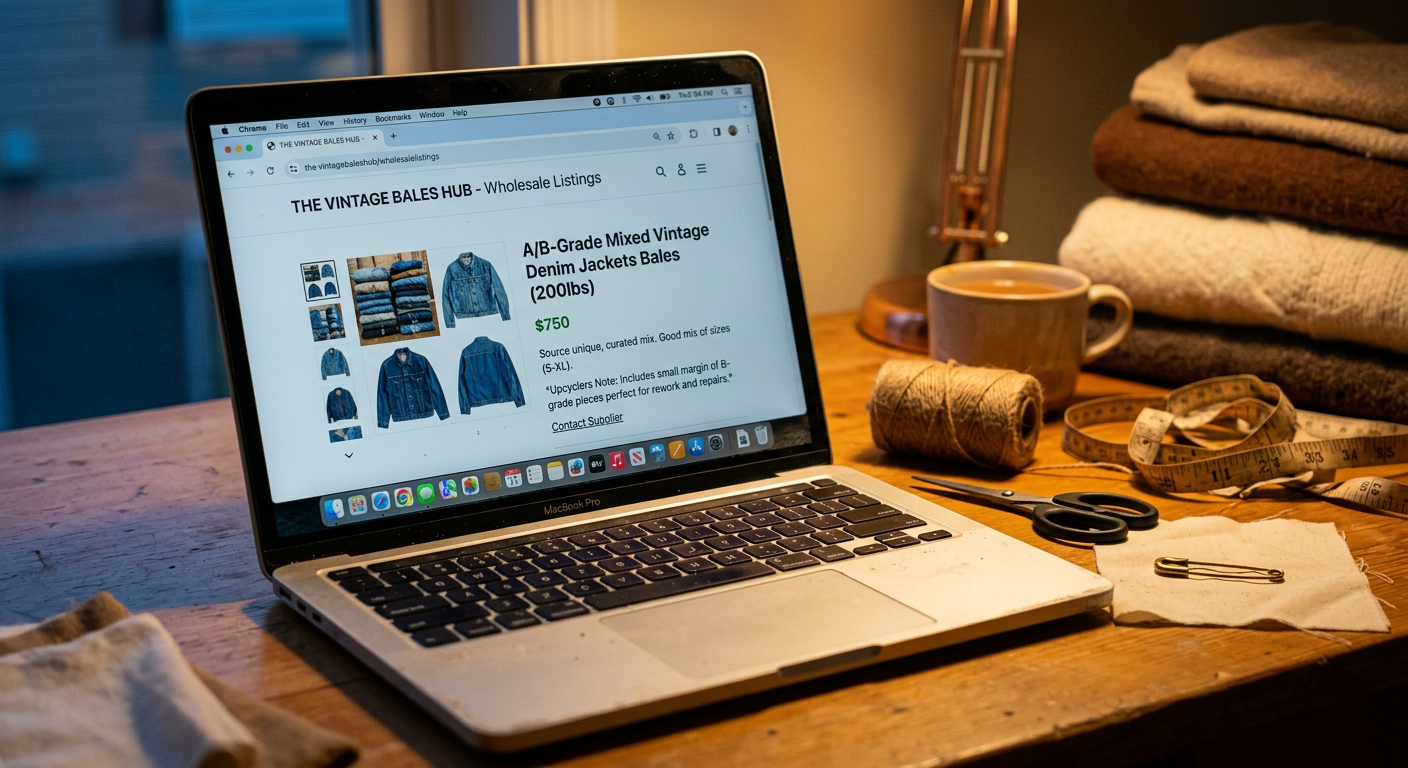
Finding the best wholesale vintage clothing suppliers requires auditing their grading consistency, shipping reliability, and the specific "niche" of their sorting house. You should look for suppliers that allow you to buy in different formats—such as Wholesale Vintage Clothing Bundles—rather than just mystery boxes, so you can control your inventory's price point.
When I’m vetting a new source for our upcycling projects, I look for three things:
- Transparency: Do they show you exactly what "Grade B" looks like?
- Volume: Can they ship a 100-lb lot today, or are they waiting on a container?
- Specialization: A supplier that claims to be the "best" at everything usually isn't. I prefer a source that knows their Mickey and Disney T-Shirts are their strongest category.
Why is buying vintage clothing in bulk better than hand-picking?
Buying in bulk is superior because it lowers your average cost per unit and provides a steady stream of "bonus" items that can be upcycled for high margins. While hand-picking at a local thrift store might net you a $50 profit on one shirt, sourcing a bulk Brand Name Mix allows you to process 50 units in the same amount of time, resulting in a higher total net profit.
I’ve run the numbers. When I hand-pick, I might spend 4 hours finding 10 items. That’s a lot of "dead time." When I order a 50-lb bale, the inventory comes to me. Even if 10% of that bale needs a repair or a creative "intervention" (like a lace-up side seam or a cropped hem), my cost basis is so low—often $2 to $5 per pound—that my profit per hour (PPH) skyrockets.
The Math of Bulk Sourcing (Example 50-lb Lot)
| Metric | Hand-Picking (Retail) | Wholesale Bulk (TVF) |
|---|---|---|
| Initial Investment | $200 | $350 |
| Number of Units | 15 items | 75-80 items |
| Average Cost per Piece | $13.33 | $4.37 |
| Processing Time | 6 hours (travel/sourcing) | 1 hour (unboxing) |
| Potential Revenue | $600 | $1,600+ |
How do you prepare wholesale vintage clothing for resale?
To prepare wholesale inventory for resale, you must follow a strict process of sorting, laundering (or steaming), minor repairs, and professional photography. I recommend a "triage" system: Grade A goes straight to the steamer; Grade B goes to the sewing station for upcycling; Grade C is set aside for patch material or heavy reconstruction.
In my workshop, the "Grade B" pile is where the real money is made. If I get a box of Wholesale Vintage Tees with small pinholes, I don't toss them. I use a "visible mending" technique with contrasting embroidery thread. A shirt that was worth $5 as a "damaged" wholesale item suddenly becomes a $45 "artisan upcycled" piece. That’s how you beat the competition on Depop—you offer something they can't just buy from another supplier.
What is the environmental impact of buying bulk second hand?
The environmental impact of buying bulk second hand is significantly lower than new manufacturing because it extends the life of existing textiles and prevents them from entering landfills. By purchasing from wholesale vintage clothing suppliers, you are participating in a circular economy that reduces the demand for "virgin" cotton and synthetic fibers, which are water and chemically intensive to produce.
I see the waste every day. Thousands of pounds of perfectly wearable denim or fleece get discarded because of a broken zipper. When we buy bulk, we are effectively intercepting waste. My upcycling initiatives at TVF are designed to ensure that even the "unwearable" becomes a resource. We aren't just selling clothes; we're managing textile waste.
Frequently Asked Questions
Where can I buy vintage clothing for my Depop shop?
You can buy vintage clothing in bulk through Wholesale Vintage Clothing Mixes which are specifically curated for the aesthetic demands of Depop and Poshmark.
Are wholesale vintage clothing bales worth it?
Yes, bales are worth it if you have the space to process high volumes and the skills to clean or repair Grade B items to maximize your ROI.
How do I calculate profit on wholesale vintage?
Subtract your total cost (inventory + shipping + cleaning supplies) from your total sales revenue, then divide by the hours spent processing to find your profit per hour.
Can I find specific brands in wholesale lots?
Most suppliers offer "Brand Name Mixes" that include labels like Nike, Carhartt, and Levi’s, though the exact ratio varies by the grade and lot size.
Conclusion
Success in the vintage world isn't about luck; it's about systems. To win in 2026, you need to treat your inventory like a manufacturer treats raw materials. Choosing the right wholesale vintage clothing suppliers is the first step, but what you do once that 50-lb box hits your floor is what determines if you're a hobbyist or a business owner.
Stop fearing the "damaged" items. Embrace the bulk. Whether you’re looking for a Kids Mixed Bale to tap into the sustainable parenting market or a Rock & Music T-Shirts Mystery Box to fuel your online shop, the goal is always the same: maximize the life of every fiber.
Ready to scale your inventory and start your own upcycling journey? Explore the curated collections at Thrift Vintage Fashion and find the bulk lots that will define your brand this year.