


How to source inventory for a vintage clothing store?
TL;DR
- Source via bulk wholesale suppliers for consistency, using 100 lb bales or sorted mystery boxes to scale.
- Prioritize diverse categories like Mickey/Disney T-Shirts and college wear to drive high-turnover sales.
- Mix high-margin "finds" from estate sales with high-volume wholesale lots to keep inventory fresh and profitable.
- Implement a 3-step quality control process—inspect, clean, and grade—to ensure pieces align with 2026 market standards.
When I’m looking at a 40-foot shipping container arriving at our dock, I’m not just looking for "cool clothes." I’m looking at throughput, sell-through rates, and grade consistency. Whether you are stocking an Instagram shop or a physical boutique, you need a repeatable system to acquire inventory without spending 40 hours a week digging through bins. This guide draws directly from how we manage arrivals and what I see working for our most successful retail partners.
What are the best ways to source vintage clothing for resale?
The most effective way to source inventory for a vintage clothing store is a hybrid model combining high-volume wholesale purchases, targeted mystery boxes, and local estate sourcing. Wholesale sourcing allows you to acquire 50 to 500 pieces at once, providing the necessary volume to maintain a consistent listing schedule on platforms like Depop or Poshmark.
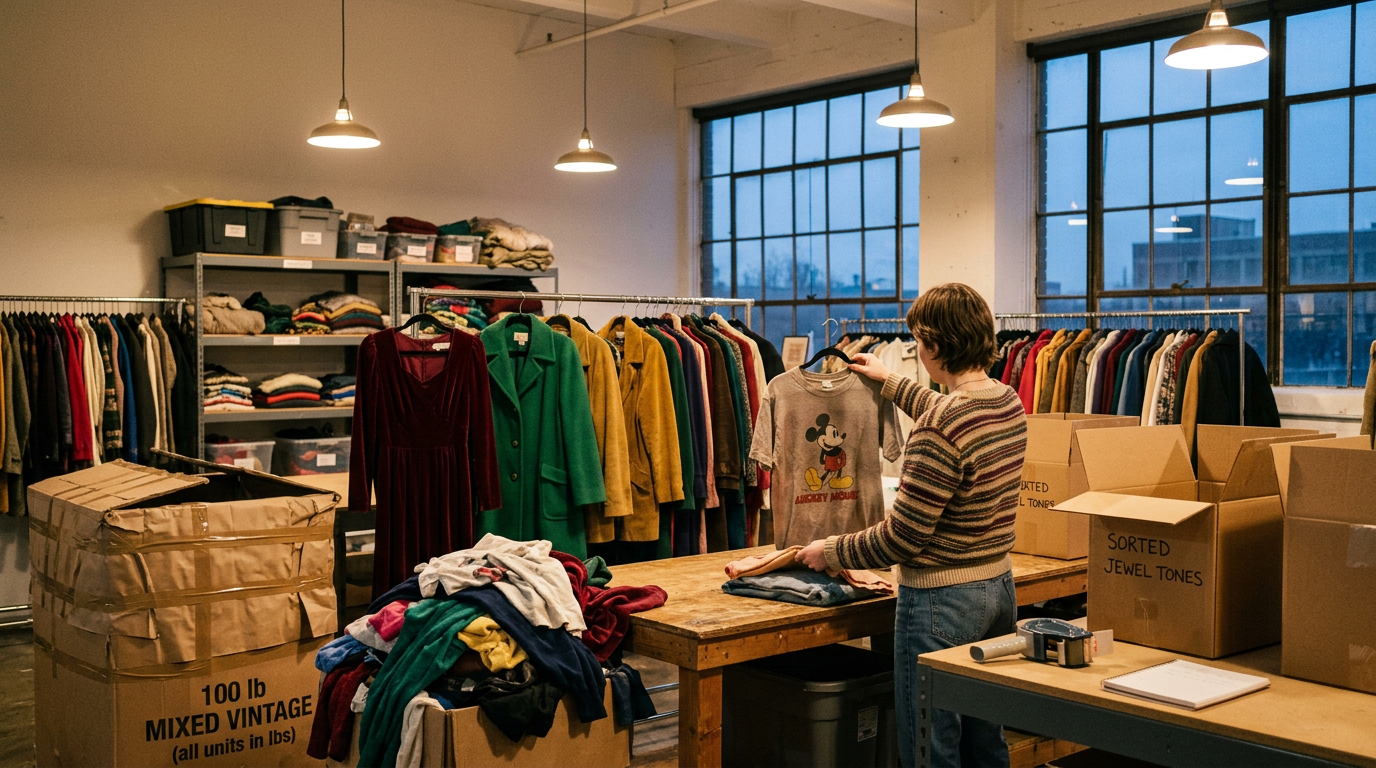
In our warehouse, we categorized everything into tiers. If you are just starting, you cannot rely solely on the "luck of the draw" at local thrift shops. You need predictable inventory. I recommend dedicating 70% of your budget to proven Wholesale Vintage Clothing Mixes and 30% to "hunt" items that have higher individual margins. This balance keeps your cash flow steady while allowing for those big-ticket sales that boost your brand's reputation.
Sourcing via Wholesale Bales
A vintage clothing bale is a highly compressed large block of unsorted or semi-sorted used clothing, typically weighing 100 lbs or 1000 lbs. Bales are the bedrock of high-volume sourcing. When we process a Kids Mixed Bale, we are looking for a specific yield.
From a 100 lb bale, you might get 150-200 items. I’ve seen resellers double their investment just on the "Grade A" items in a bale, leaving the "Grade B" items for clear-out sales or upcycling projects.
Sourcing via Curated Mystery Boxes
For those who don't have the space to process 100 lbs of unsorted denim, mystery boxes are the logistical answer. These are pre-sorted categories where the wholesaler does the heavy lifting of grading. For example, our College & University T-Shirts box removes the risk of getting stuck with unmarketable filler. You get a specific count of a specific category, making it much easier to project your margins.
Where to buy vintage clothing for Depop shop owners?
Depop shop owners should buy vintage clothing from specialized wholesalers that offer category-specific bundles, such as graphic tees, 90s sportswear, or "Gorpcore" outerwear. Because Depop is a visual, trend-heavy platform, sourcing focus should be on "category-true" items rather than bulk unsorted rags.
I’ve monitored the data on what moves for our Depop-focused clients. In 2026, the trend is shifting toward specific aesthetics. If you're sourcing for this demographic, look for Wholesale Vintage Tees. The "Rebel" aesthetic or specific band prints are currently outperforming generic vintage.
Managing Inventory for TikTok Shop and Instagram
Social media selling requires high-frequency posting. To keep up, I suggest sourcing:
- Bulk Brand Mixes: Items that people recognize instantly, like our Brand Name Mix.
- Thematic Drops: Buying a bulk lot of Rock & Music T-Shirts allows you to do a "Music Monday" drop, which builds customer anticipation.
How much does it cost to stock a vintage store?
Initial inventory costs for a vintage store typically range from $500 for an online-only shop to $10,000+ for a fully stocked brick-and-mortar location. Most successful resellers start with a "seed" investment in 2-3 bulk categories to ensure their shop looks full and professional from day one.
In my work at the warehouse, I've seen that the most profitable path is starting with about 200-300 lbs of mixed inventory. Here is a breakdown of how a typical $1,500 initial sourcing budget usually looks for a serious reseller:
| Sourcing Method | Estimated Weight | Item Count | Target Platform |
|---|---|---|---|
| Bulk T-Shirt Bales | 100 lbs | 150-180 | Depop / Whatnot |
| Mixed Brand Name Bales | 100 lbs | 80-100 | Etsy / Poshmark |
| Premium Mystery Boxes | 30 lbs | 25-30 | Boutique / IG |
| Local Estate Sourcing | Variable | 10-15 | High-end Grailed |
How to clean and prep wholesale vintage clothing for resale?
The best way to prep wholesale vintage clothing is to follow a "Sort, Scythe, and Steam" workflow: first, inspect for major damage; then, treat stains and launder; and finally, use a commercial steamer to remove wrinkles and odors. This process ensures that bulk-sourced items meet the "retail ready" standard expected by modern consumers.
When a shipment arrives at your door, the first thing I do is get it out of the plastic and let the fibers breathe. Vintage clothing that has been compressed in a bale for months will have "bale smell"—this is normal. It's the smell of the warehouse and the journey.
My 3-Step QC Checklist
- Pit and Collar Check: These are the first places I look for yellowing or sweat stains. If a shirt is from a premium lot but has a stain, we use an oxygen-based soak for 24 hours.
- The "Scent" Test: If an item still smells "musty" after one wash, I use a dedicated fabric sanitizer. Never ship an item that smells like a basement; it’s the quickest way to get a 1-star review.
- Repair vs. Upcycle: If I find a Carhartt jacket with a hole, I don't toss it. Because of the "distressed" trend in 2026, I might grade that as a "character piece" or sell it in a bulk lot for upcyclers.
What categories are most profitable for vintage resellers in 2026?
The most profitable vintage categories in 2026 include 90s/Y2K era graphic tees, workwear (Carhartt/Dickies), and collegiate apparel. High-demand niches like licensed Disney characters or specific 80s rock bands continue to command the highest price-to-weight ratios in the wholesale market.
I've noticed that university gear has remained an evergreen seller. Whether it’s a 1994 Rose Bowl tee or a simple 80s champion sweatshirt, people buy for the "aesthetic" of the school even more than the school itself. If you are struggling with what to buy first, start with College & University T-Shirts. They are easy to photograph, easy to ship, and have a very predictable size fit.
Frequently Asked Questions
Where do vintage stores get their inventory?
Most vintage stores get their inventory from wholesale suppliers who buy clothing in bulk from donation centers, textile recyclers, and estate liquidators. They supplement this with "picking" at thrift stores or buying from individual collectors.
Is buying vintage bales worth it?
Buying vintage bales is worth it for resellers who have the space to process large volumes and the ability to sell lower-grade items alongside premium pieces. It offers the lowest price-per-item, which maximizes potential profit margins.
How do I find a reliable vintage wholesaler?
Find a reliable wholesaler by checking for transparency in their grading process, looking for reviews from other resellers, and ensuring they provide clear shipping and weight information. A good wholesaler like Thrift Vintage Fashion should be able to explain exactly how they categorize their mixes.
How much weight is in a standard vintage bale?
A standard small vintage bale typically weighs 100 lbs, while large commercial export bales can weigh 1000 lbs or more. For most small to medium resellers, the 100 lb option is the most manageable for residential shipping.
Do I need a business license to buy wholesale?
While requirements vary by state, most reputable wholesale suppliers do not strictly require a resale certificate for small orders, but having one can often exempt you from paying sales tax on your inventory purchases.
How can I tell if a vintage shirt is authentic?
Authenticity is determined by checking the "neck tag" for the era (e.g., Screen Stars, Giant, Fruit of the Loom), inspecting the stitching (single-stitch vs. double-stitch), and evaluating the screen print fade and fabric feel.
Sourcing isn't a one-time task; it's the pulse of your business. If your inventory is stale, your sales will be too. I’ve seen hundreds of shop owners grow from buying one box to ordering multiple bales a month by simply being consistent with their sourcing schedule.
At Thrift Vintage Fashion, we’ve built our entire operation around making this process easier for you. We take the guesswork out of the "hunt" so you can focus on the "sell." Whether you’re looking for bulk tees or specific brand mixes, we have the inventory ready to ship to your door.
Stop digging and start scaling. Explore our full range of Wholesale Vintage Clothing Mixes today and let's get your store stocked for 2026.