


How Are the Vintage Clothing Bales Graded?
TL;DR
- Grading is a systematic sorting process that categorizes vintage clothing by quality (Grade A, B, or C) and specific style or era.
- Grade A represents "near-perfect" quality, Grade B includes minor repairable flaws, and Grade C is typically for upcycling or "rag" use.
- Standard bales usually weigh 100 lbs or 45,000 lbs for containers, with pricing dictated by the rarity and demand of the specific category.
- Successful resellers choose grades based on their specific business model, whether it is high-end curation or high-volume thrift selling.
Buying in bulk is a cornerstone of the The Rapid Growth and Evolution of the Vintage and Retro Thrifted Cloth market. It allows resellers to lower their average cost per item, but it also introduces the risk of receiving "deadstock" or unsellable items if the grading isn't clearly understood. This guide demystifies the grading process used by facilities to ensure you can source with confidence.
Grading isn't just about whether a shirt has a hole; it’s about a complex intersection of age, brand relevance, fabric integrity, and current fashion trends. Whether you are looking for Wholesale Vintage Tees — THRIFT VINTAGE or heavy winter coats, knowing the "grade" is the difference between a high-profit flip and a storage unit full of stagnant inventory.
What is the process for grading vintage clothing bales?
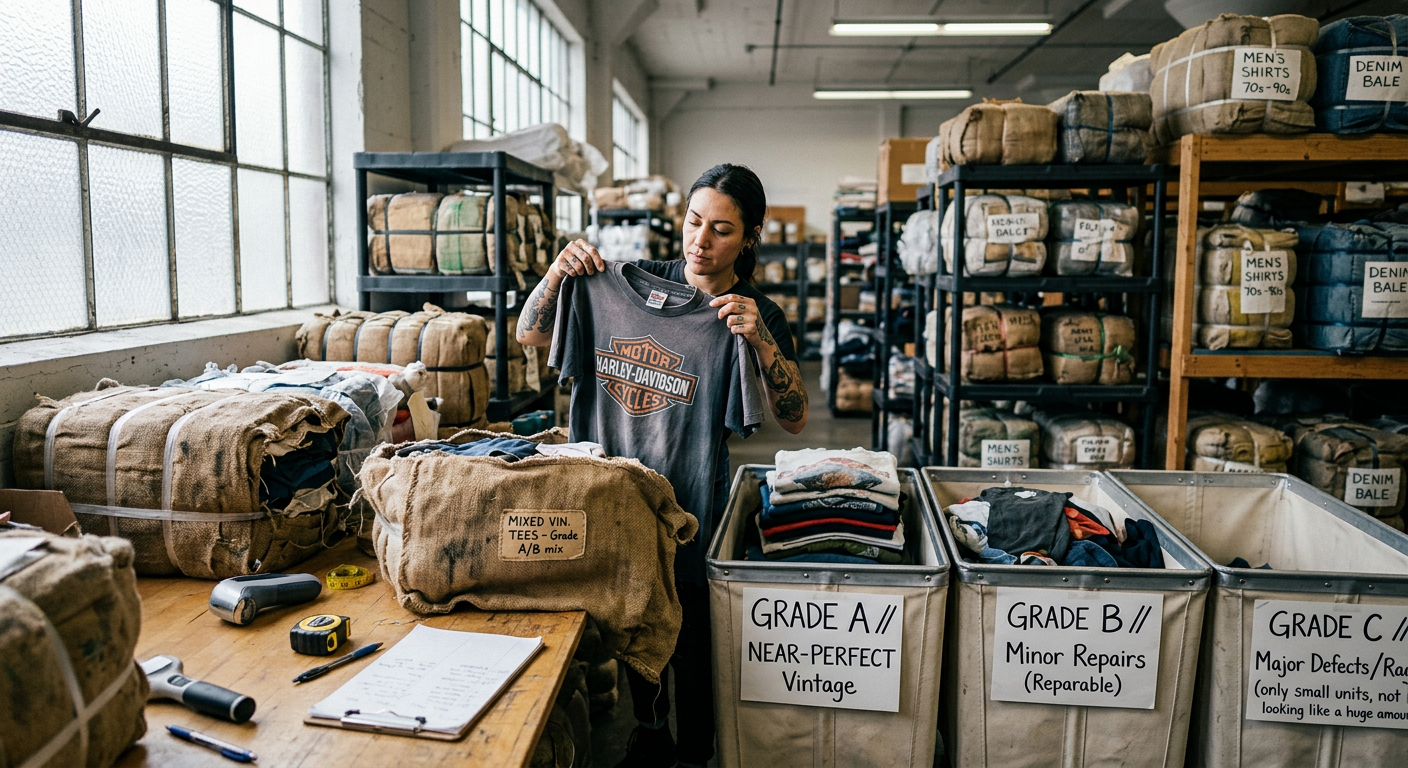
Vintage clothing grading is the manual inspection and categorization of bulk used apparel based on specific criteria like condition, brand, era, and style. Workers at sorting facilities examine each garment individually to determine its market value and categorize it into tiers, typically labeled Grade A, Grade B, or Grade C.
The process typically begins at a centralized sorting facility where massive "raw" loads of clothing—often weighing several thousand lbs—are broken down. In 2026, many top-tier facilities use a three-step inspection process:
- Initial Sort: Clothing is separated by general category (e.g., t-shirts, denim, jackets).
- Quality Inspection: Each item is checked for "the big four" flaws: stains, holes, odors, and broken hardware (zippers/buttons).
- Aesthetic Evaluation: Skilled graders look for "high-value" indicators such as single-stitch seams, Made in USA tags, or specific 90s/Y2K branding.
How are the vintage clothing bales graded by quality levels?
Vintage bales are graded primarily into three categories: Grade A (excellent condition, retail-ready), Grade B (minor visible wear or easily fixable flaws), and Grade C (significant damage, often sold for upcycling or fabric weight). Most reputable wholesalers focus on Grade A and B to support the needs of active resellers on platforms like Etsy and Instagram.
Understanding these tiers is vital for your inventory strategy:
Grade A: The Premium Tier
Grade A vintage is characterized by garments that are in like-new or very good vintage condition. While they are still used items, they should not have major distractions. A Grade A Mickey/Disney T-Shirts — THRIFT VINTAGE might show slight fading, but it will not have large holes or permanent grease stains.
- Best for: High-end Depop sellers, boutiques, and curated vintage shops.
- Expectation: 85-95% of the items are ready for immediate listing after a steam or light wash.
Grade B: The Reseller's "Sweet Spot"
Grade B items are still highly wearable but possess "character flaws." This might include a small pinhole, a missing button, or light cracking on a graphic print. Many resellers prefer Grade B because the price per lb is lower, and many flaws can be fixed with basic sewing or cleaning.
- Best for: Thrifters, flea market vendors, and DIY upcyclers.
- Expectation: These items require more "prep" time but often yield the highest margins if the brand is desirable.
Grade C and "Rag" Grade
Grade C items have significant damage, such as large tears, heavy staining, or broken zippers. While these are rarely sold in curated bales, they are often used for "rework" projects. This contributes greatly to the sustainability of the industry by preventing textiles from reaching landfills, a topic explored in The Donation Model is Broken: What Really Happens to Donated Clothing.
| Grade | Condition | Typical ROI | Prep Required |
|---|---|---|---|
| Grade A | Near Perfect / Minor Fade | High | Minimal (Steam & Image) |
| Grade B | Pinhole / Small Stain | Very High | Moderate (Wash/Repair) |
| Grade C | Large Hole / Broken Zip | Low | Extensive (Rework/Upcycle) |
Why does bale weight matter for vintage grading?
Bale weight matters because it acts as the primary unit of measurement for wholesale pricing, typically standardized at 100 lbs for small bundles and up to 1,000 lbs for heavy-industrial bales. Knowing the weight allows a reseller to calculate their "cost-per-unit" by estimating how many items of a certain category fit within that specific weight limit.
For example, a 100 lb bale of t-shirts will contain significantly more units (roughly 150-250 shirts) than a 100 lb bale of heavy denim jackets (roughly 40-60 jackets). When you see Wholesale Vintage Clothing Mixes — THRIFT VINTAGE, the pricing is often a reflection of the labor involved in grading and the weight-to-volume ratio of the specific items.
Weight categories commonly found in 2026:
- Small Packs (10-25 lbs): Perfect for beginners or those testing a new niche.
- Standard Bales (100 lbs): The industry standard for established resellers; most manageable for home-based businesses.
- Giant Bales (1,000 lbs+): Designed for brick-and-mortar stores with large processing teams and warehouse space.
How to choose the right grade for your resale business?
To choose the right grade, you must identify your target market and the amount of "sweat equity" you are willing to invest in your inventory. Premium boutiques should stick to Grade A, while high-volume sellers and upcyclers can maximize profits by purchasing Grade B or mixed category bales.
If you are a reseller focusing on the "Gorpcore" trend or workwear, a Thrift Vintage Fashion: Kids Mixed Bale or a similar specialty mix might offer better returns regardless of the technical grade because the demand for the style outweighs minor condition issues. For those wondering how are the vintage clothing bales graded specifically for niche items, the answer often lies in the "sought-after" nature of the brand. A Grade B Carhartt jacket often sells for more than a Grade A unbranded jacket.
Steps to select your ideal bale:
- Analyze your sales history: Do your customers pay a premium for "perfect" items?
- Calculate your time: Do you have 10 hours a week to wash and mend Grade B items?
- Check your storage: A 100 lb bale occupies about 10-15 cubic feet; do you have the space?
Frequently Asked Questions
What does Grade A vintage mean?
Grade A vintage refers to items in very good condition with no major flaws like holes or stains. These garments are usually ready for resale with minimal cleaning and represent the top tier of bulk inventory.
Can I return a vintage bale if I don't like it?
Most wholesale vintage companies do not allow returns on bales because they are sold as "mystery" or "bulk" lots with an inherent element of risk. It is important to buy from reputable sources like Thrift Vintage Fashion to ensure grading consistency.
How many items are in a 100 lb bale?
The number of items depends on the weight of the individual pieces; for example, a 100 lb bale might contain 200 light t-shirts or 50 heavy winter coats. Always check the average weight of the clothing category you are purchasing.
Is Grade B vintage worth buying?
Yes, Grade B vintage is often the most profitable for resellers who are willing to perform minor repairs or deep cleaning. Because the initial cost is lower, the potential for a high profit margin is much greater than Grade A.
Do vintage bales come washed?
Most bulk vintage bales are not pre-washed and are shipped in the condition they were sorted. Resellers are expected to launder, steam, and prep the clothing before listing it on retail platforms.
Conclusion
Understanding how the vintage clothing bales are graded is the most important step in scaling a sustainable fashion business. By mastering the nuances between Grade A and Grade B, and knowing how weight influences your per-unit cost, you can make informed purchasing decisions that protect your margins.
The vintage industry in 2026 is about more than just "old clothes"—it’s about curate-able assets that support a circular economy. Whether you are stocking your first Depop shop or expanding a multi-channel retail empire, sourcing the right grade of bulk inventory is your foundation for success.
Ready to take your resale business to the next level? Explore the professionally graded collections at Thrift Vintage Fashion and find the perfect bale for your niche today.