


How to Buy Used Clothing in Bulk for Your Resale Business
TL;DR
- Buying in bulk involves purchasing unvetted or graded inventory by weight or "bales" to lower your cost-per-item (COGS).
- Focus on specific categories like Wholesale Vintage Tees to ensure high-demand inventory for platforms like Depop and Poshmark.
- Success requires a "volume game" mindset—expect some duds, but profit on the hidden gems and consistent sleepers.
- Always calculate the price-per-pound (lb) and shipping costs before finalizing any bulk purchase to protect your margins.
Most people get it wrong by obsessing over the "jackpot" item. They want that one 1990s 3D Emblem Harley shirt. While those exist, the sustainable way to buy used clothing in bulk is to focus on your floor—the consistent, mid-tier items that sell for $25-$45 week in and week out. If you are sourcing for a boutique or a high-volume eBay shop, you need a system, not a lottery ticket.
What does it mean to buy used clothing in bulk?
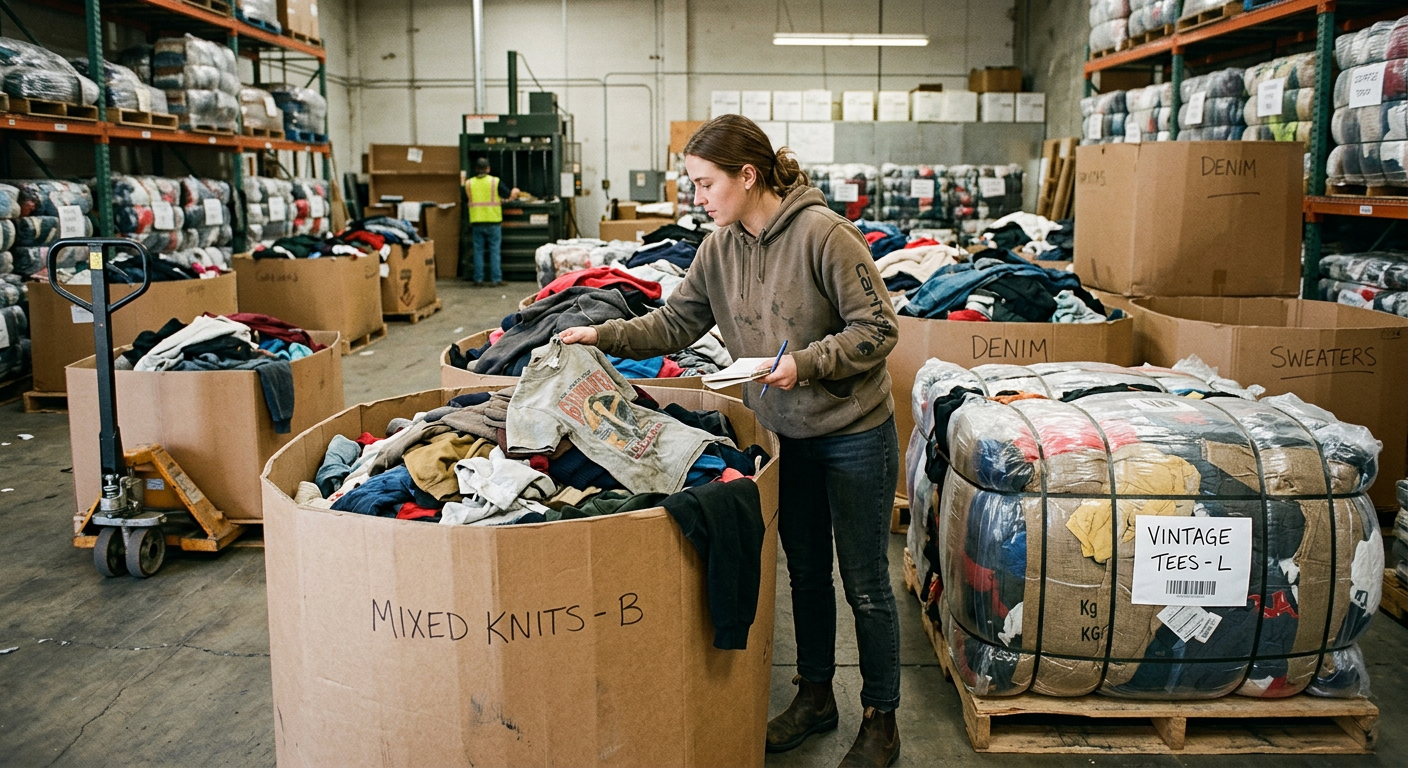
Buying used clothing in bulk refers to the practice of purchasing large quantities of pre-owned apparel, typically by weight (lbs) or in pre-packed "bales," at a significantly lower price point than individual wholesale. This sourcing method allows resellers to acquire massive amounts of inventory at a low cost-per-unit, which is essential for scaling a business on platforms like Depop, Etsy, or TikTok Shop.
Where should you buy used clothing in bulk for a Depop shop?
The best place to buy used clothing in bulk for a Depop shop is through specialized vintage wholesalers who offer category-specific mixes rather than raw unsorted rags. For a curated aesthetic, you should look for Wholesale Vintage Clothing Mixes because these are pre-sorted to meet the specific "vintage" criteria (items over 20 years old) that Depop buyers demand.
When we curate for our customers, we focus on the "vibe." If you are sourcing for the Y2K or 90s aesthetic, buying a generic "used clothing" lot will result in 80% modern fast fashion that won't sell on Depop. You need targeted lots. For example, if your shop focuses on that classic Americana look, sourcing a Mickey/Disney T-Shirts lot ensures you have recognizable, high-demand IP that moves quickly.
How much do vintage clothing bales cost?
In 2026, the price for vintage clothing bales typically ranges from $1.50 to $12.00 per pound, depending on the grade, the category of the items, and the total weight purchased. A standard 100-lb bale of premium Grade A vintage will carry a higher price tag than a 1,000-lb bale of raw, unsorted credentials.
At Thrift Vintage Fashion, we advocate for looking at the "landed cost." This is your price + shipping divided by the number of units. If you buy a bale for $500 plus $150 shipping, and it contains 150 items, your cost per item is roughly $4.33. If your average sale price (ASP) is $25, you are in a healthy position.
Bulk Pricing Comparison Table (Estimated)
| Category | Typical Weight | Estimated Price-per-lb (2026) | Best Platform |
|---|---|---|---|
| Mixed Vintage Bales | 100 lbs | $3.50 - $5.50 | eBay / Flea Markets |
| Branded Sportswear | 45 lbs | $6.00 - $9.00 | Depop / Instagram |
| Kids Mixed Bale | 50 lbs | $4.00 - $6.00 | Poshmark / Etsy |
| Pro Sport/College Tees | 25 lbs | $8.00 - $12.00 | TikTok Shop / Whatnot |
What are the best clothing categories for TikTok Shop resellers?
The best clothing categories for TikTok Shop resellers are high-graphic, recognizable brands and "mystery" themed items like the College & University T-Shirts Mystery Box. TikTok is a visual and narrative platform; items with bold logos or clear "storytelling" potential (like a 90s era starter jacket) capture attention in the first 3 seconds of a scroll.
We’ve seen a massive shift toward "entertainment" selling. If you are buying bulk for a live show, you need variety. A Brand Name Mix is ideal because it gives you "names" to put in your title—Nike, Adidas, Carhartt—which triggers the platform's algorithm to show your stream to interested buyers.
How do you clean and prep wholesale vintage clothing for resale?
To prep wholesale vintage clothing for resale, you must first sort by fabric type, treat stains with a professional-grade oxy-bleach or enzymatic cleaner, and then either launder on a delicate cycle or use a commercial steamer to remove odors and wrinkles. Because bulk clothing is often compressed in bales, the "bale smell" (a mix of dust and storage) is common; a heavy-duty steamer is your best friend for refreshing fibers without damaging them.
Here is my personal checklist for processing a new bulk arrival:
- The "Air Out": Open the bale in a well-ventilated area. Let the clothes breathe for 24 hours.
- The Sort: Separate into "Ready to Sell," "Needs Repair," and "Death Pile/Upcycle."
- The Wash: Don't wash everything. High-value items or delicate knits should be hand-steamed. Standard cotton tees can be laundered.
- The Measure: Vintage sizing is not modern sizing. A 1994 Large is often a 2026 Medium. Always provide measurements.
Why buying in bulk is better for the environment
The environmental impact of buying bulk second-hand vs. new inventory is massive, as it directly diverts thousands of pounds of textiles from landfills and reduces the carbon footprint associated with manufacturing new garments. Every pound of used clothing you buy in bulk represents a "saved" garment that doesn't require new water, pesticides, or chemical dyes.
I’ve written before about how the donation model is broken. When you buy used clothing in bulk from a supplier like us, you are part of the circular economy. You are the final filter that ensures a piece of clothing finds a home instead of a furnace.
Key mistakes to avoid when buying bulk
I have seen many resellers fail because they make these three mistakes:
- Over-estimating Grade A: "Grade A" does not mean "Brand New." It means no major holes or unremovable stains. Expect minor wear; it’s vintage.
- Ignoring Weight Costs: Shipping 100 lbs of clothing is expensive. Always factor shipping into your COGS.
- Not Diversifying: If you only buy one type of item, you are vulnerable to trend shifts. Mix your inventory with staples like denim and sweatshirts.
Frequently Asked Questions
What is a vintage clothing bale?
A vintage clothing bale is a large, highly compressed bundle of used garments, typically weighing 100 lbs or more, wrapped in plastic and secured with metal wire.
How many shirts are in a 100-lb bale?
On average, a 100-lb bale contains approximately 150 to 200 t-shirts, depending on the weight and size of the individual garments.
Can I choose specific items in a bulk order?
No, bulk orders are typically sold as "mystery" mixes or category-specific lots where the supplier chooses the individual items based on grade.
Is buying used clothing in bulk profitable?
Yes, it is highly profitable if you manage your labor costs for cleaning and listing, and maintain a sell-through rate that covers your initial investment.
Do I need a tax ID to buy bulk?
In many cases, yes; having a resale certificate allows you to buy from wholesale suppliers without paying sales tax on the inventory.
What is the difference between Grade A and Grade B bulk?
Grade A items are in good used condition with minimal wear, while Grade B items may have small holes, stains, or heavy fading.
If you are ready to stop hunting through individual racks and start scaling your business, it is time to think bigger. At Thrift Vintage Fashion, we specialize in providing the high-quality, high-demand inventory that keeps your shop's "New Arrivals" section fresh. Whether you need a specific niche like Rock & Music T-Shirts or a massive mix of era-defining staples, we have the volume and the expertise to help you grow.
Source smarter, sell faster, and let’s keep these clothes out of the landfill together. Visit Thrift Vintage Fashion today to find your next winning bale.